Eventually, most website owners get to the same place. You have a good website with good content, but it's still crawling. One of the indicators search engines use to determine whether a page is worthy of being read/visited is backlinks, links from other pages directed to your page.
This is the reason that plenty of newbies are looking for ways to build backlinks for them. It may be a fair question but there's real risk of it. Here's a guide to how sponsored placements work, where to find them, what to review before investing and where Google draws the line.
What Are Paid Backlinks?
A paid backlink is a link embedded in a website by someone for the purpose of earning money, a free product or any other type of compensation. It could be in a blog in a sponsorship area or a resource list, or in a sponsored article.
Unlike earned link building, this isn't one that someone has earned. Earned link is when someone links to you's content if it is valuable without any payment. Paid links resemble more towards advertising. The link is part of the deal you don't pay to access your audience, you pay to access the publisher's audience.
How to Get Paid Backlinks
There are a couple of general ways of doing it. They are all not short cuts and each requires some study.
Sponsored posts on niche blogs
There are several bloggers out there who will openly accept sponsored content. You can send them an article and they send you one, and it's there with a distinct label for the sponsor. The cost will depend on the audience and reputation of the site.
Publisher and marketplace outreach
Some publishers have media kits available for sale to advertise their sponsored placements. There are also outreach marketplaces that have site owners providing sponsored posts. Just like any vendor, ask questions, sample them and never pay for one you have not visited.
Direct outreach
The key to often getting the best deal is a brief polite e-mail. Introduce yourself, explain why your material is appropriate for them and inquire if they have any sponsored placement opportunities. Avoid sending out the mass emails. They're easy to identify at a glance by editors.
Best Ways to Find Quality Backlink Opportunities
Having the right site is more important than having the cheapest site. There are a number of strategies that are effective:
- Directly search your niche. Use phrases such as “sponsored post,” “write for us” or “advertise with us” in conjunction with your topic.
- Study your competitors. When some blogs refer to a similar site, they may be open to putting you on their site.
- Check out opportunities for guest blogging. There are numerous blogs which allow guest blog posts for free so long as it is truly helpful. Quality over quantity, a free guest post that is well received will be better than a paid one!
- Follow niche communities. Sponsorship is also available for industry newsletters, podcasts and association websites.
Suppose you are a small blogger and are operating a travel blog, that focuses on Pakistan. Even the best of tech blogs is better than a sponsored feature on a local travel site, in this instance, though perhaps not in others.
What to Check Before Buying Backlinks
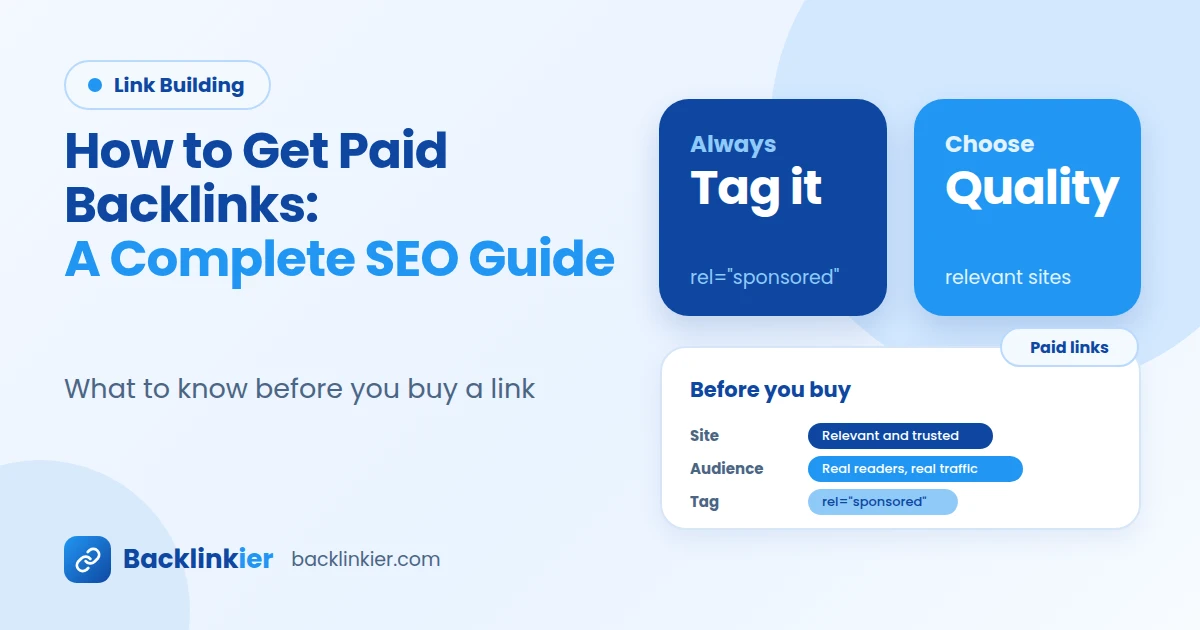
Take 10 minutes to research the site prior to paying.
- Relevance: The location should be on a topic with relevance to you. When a site has links that don't relate to the content, they appear out of place and no visitors will be of any benefit.
- Quality of content: read a few articles. If they're thin, poorly written, or crammed with links; get off of them.
- Organic traffic: Use a tool like Ahrefs or Semrush to see the estimated amount of organic traffic the site has. Use the numbers as approximate figures, not as exact figures.
- Transparency: Good publishers are transparent about pricing, include what you get in the price, and clearly mark sponsored content. Avoid giving rundown or unhelpful responses.
- Link location: Links embedded in an appropriate body of an article are preferred to links in a footer or sidebar. Be sure to see that the website doesn't consist of outbound links in a page to un-related businesses.
Are Paid Backlinks Safe for SEO?
This is where telling the truth is important. Google’s link spam policies state that buying or selling links that pass ranking credit, in order to manipulate search results, is against its guidelines. That means that you exchange cash or goods for unmarked links.
Google's instructions are that paid/sponsored links must have the rel="sponsored" attribute (rel="nofollow" also works). This will signal to search engines that the link is not an endorsement, but advertising.
In case Google determines that a website is purchasing links to achieve rankings, then the typical result is that they simply do not count. In severe situations a site may be subject to a manual action that will reduce the visibility of the site. There is no link that guarantees higher rankings and there's no link that can guarantee AdSense acceptance.
Then, why is there a market for sponsored placements? A linking that's properly labelled on a suitable website can deliver actual referral traffic and develop brand awareness. Consider it to be advertising first, and you're in second place when it comes to SEO.
Common Mistakes to Avoid
Novices often get stumped on particular points:
- To purchase inexpensive link in bulk from websites with little or no visitors.
- Using exact-match anchor text over and over
- You should never hide that a link is sponsored.It is never appropriate to conceal that a link is sponsored.
- To blindly believe a seller's traffic claims without verification.
- Failing to take relevance into account and pursuing a high “authority” rating
- Time to wait for the rankings to go up immediately after publishing
- Slow and select beats fast and risky every time.
Final Thoughts
The art of getting paid back links is actually the art of acquiring visibility in an ethical way. Select pertinent locations, verify their quality, require transparency and apply the sponsored attribute when applicable.
But as vital, invest your best effort in content that's worth linking to. Genuine relationships and links will always have a greater long term value than any purchased placement and will be earned links and a useful website.
FAQs
Google allows paid backlinks. Google does allow for paid backlinks?
Google's rules state that no one is allowed to purchase links to influence rankings. Paid placements should include the rel="sponsored" or rel="nofollow" attribute.
Is it possible to have more than one website linking to your site?
Rates are significantly different, depending on the size of the blog and the large publisher. Don't assume that price is a measure of quality.
Is it wise to employ paid backlinks?
There’s no guarantee. Relying on sponsored links for rankings is not advisable as this can generate referral traffic and exposure.