How to get backlinks from blog comments
To get backlinks from blog comments, find relevant blog commenting sites, read the post, leave a genuinely helpful comment under your real name, and add your website in the link field the blog provides. Most blog comment backlinks are nofollow, and truly dofollow blog comments are rare, so treat comment link building as a visibility and relationship tactic, not a ranking shortcut. This guide shows the exact steps, how to write comments that get approved, and the mistakes that get you blocked.
Do blog comment backlinks actually work?
They work, just not in the way many guides promise. A comment link won't usually lift your rankings by itself. Most blogs mark comment links as nofollow, and Google asks sites to use rel="ugc" for user-generated content, so little or no ranking credit passes through.
What you can realistically get:
- Referral traffic. A helpful comment on a busy post can bring steady visitors.
- Brand exposure. Readers see your name beside useful input.
- Relationships. Blog owners notice good commenters. That can turn into guest post invitations, quotes and real editorial links.
- A natural-looking link profile. A few comment links among many other types look normal.
So the honest answer to "how do I get backlinks from blog comments?" is: you can get the links easily, but the value comes from the people and visits behind them.
Are there any dofollow blog comments?
Some, but they're uncommon and usually not worth hunting for. A comment link is dofollow only if the blog's software or owner has left it untagged. Most platforms, including WordPress, add nofollow to comment links by default.
You can check any comment link in a minute:
- Find a link in an existing comment on the blog.
- Right-click it and choose Inspect.
- Look at the
relattribute. If it saysnofolloworugc, the link isn't a plain dofollow link.
Be wary of lists that promise "high-authority dofollow blog commenting sites." Blogs that leave comment links open are often the ones overrun by spam, and links from them can look manipulative. Google's spam policies also name abusive comment links, so chasing dofollow comments at scale is a risk with little reward.
A better rule: pick blogs for their audience and quality, and accept whatever tag the link gets.
How to get backlinks from blog comments, step by step
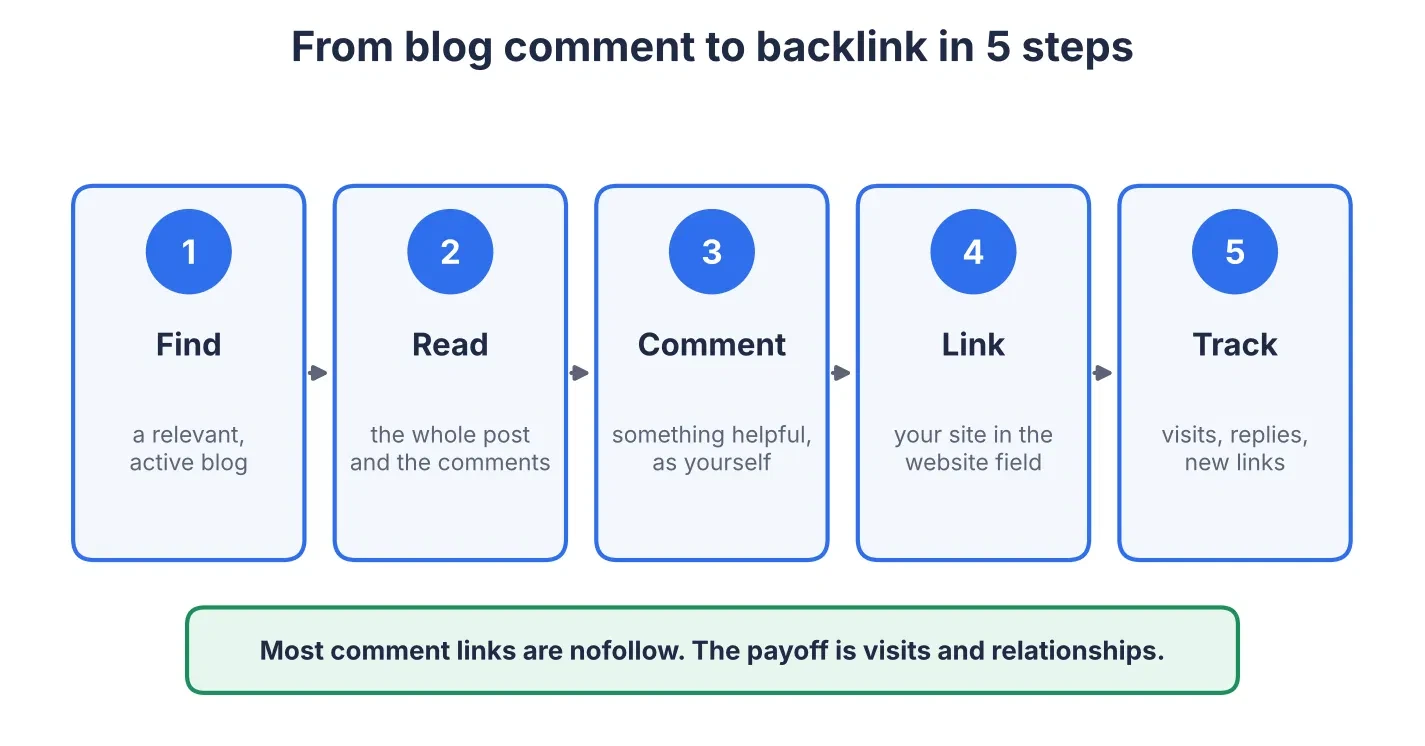
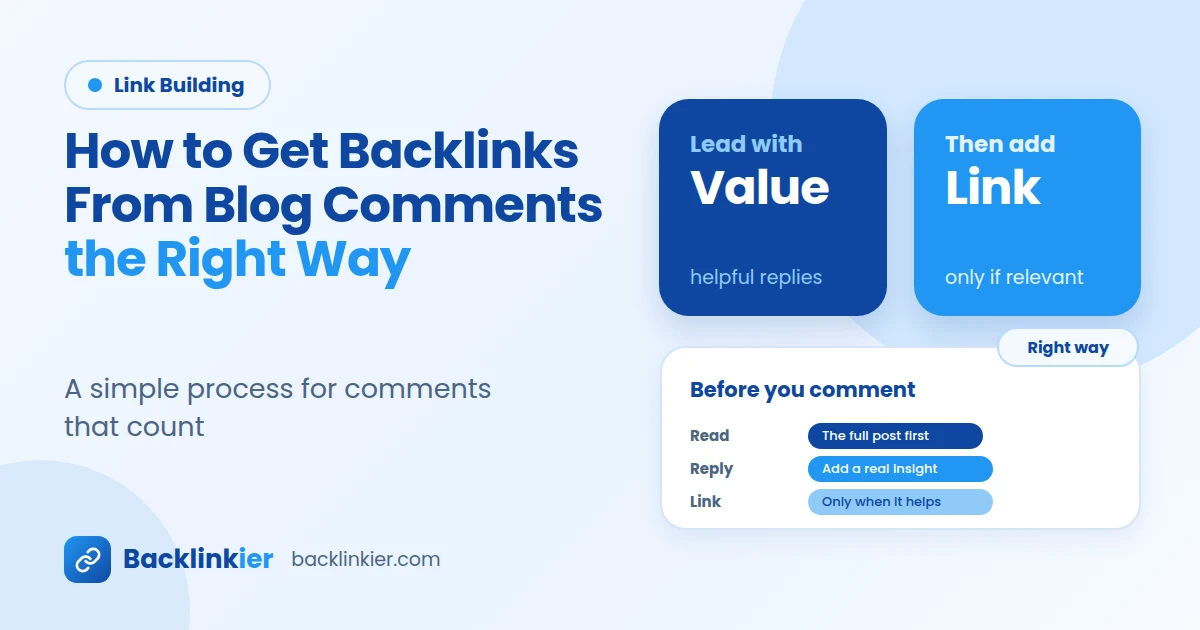
- Choose blogs in your niche. Pick active blogs your ideal readers actually visit, with recent posts and real discussion.
- Read the full post and the existing comments. You'll avoid repeating others and spot gaps you can fill.
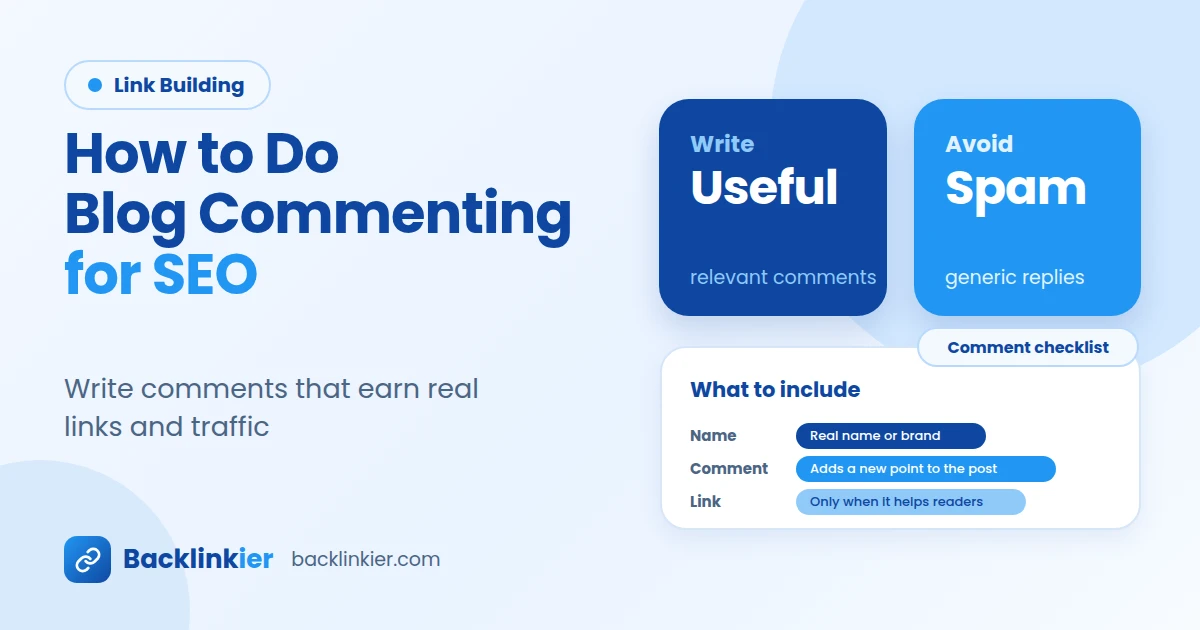
- Write a useful comment. Add an example, a related fact with its source, a respectful counterpoint or a smart question. Two to five sentences is plenty.
- Comment as yourself. Use your real name or brand name. Never use a keyword as a name.
- Add your link in the website field. Most comment forms have one. Use your homepage or a relevant page. Only put a link in the comment body if the blog allows it and it truly helps the reader.
- Submit once and wait. Comments often go to moderation. Don't repost.
- Reply to responses. A real conversation shows you're not a spammer.
- Review the result. Check the live comment, the link tag and any traffic or contacts it produced.
How do you find good blog commenting sites?
You're looking for relevant blogs that are alive and well moderated, not a list of random sites. Here are practical ways to find them:
- Search by topic. Try your topic plus "blog" or "guide" in Google, then browse beyond page one.
- Use search operators. Searching
"leave a comment" your topicor"leave a reply" your topicsurfaces posts that accept comments. - Follow industry newsletters and creators, then comment on their newest posts.
- See who commenters are. Active, thoughtful commenters on a post usually mean a healthy community.
- Look at who your peers link to and read those blogs.
Before you invest time, check each blog:
- Is there a post from the last few weeks?
- Are existing comments genuine and on topic?
- Does the author reply?
- Does the blog have a comment policy, and does it allow links?
- Is the topic close to your own?
Skip blogs flooded with spam or those that offer to approve comments for a fee.
How do you write a blog comment that earns a link?
Use a simple formula: react, add, ask.
- React to something specific in the post.
- Add a point, example or source the author didn't cover.
- Ask a short question that invites a reply.
Here's how that looks in practice, for a post about email subject lines:
"The section on curiosity gaps was spot on. One thing we found is that adding the recipient's city to a subject line lifted opens for our local shop's list. Have you tested location against a plain curiosity line?"
Compare that with a comment that gets deleted:
"Nice post! Check out my site for cheap email marketing services."
The first one is specific, adds something and invites a conversation. The second could be pasted under any article.
Some extra tips:
- Be early when you can. Early comments get seen by more readers.
- Be honest about your connection. If you mention your business, say so plainly.
- Proofread. Typos make a comment look rushed.
- Skip links in the body unless they're clearly useful and permitted.
What comment link building mistakes should you avoid?
Comment link building goes wrong in predictable ways:
- Using automation or bulk tools. Mass posting is what Google's spam policies call out, and blog owners spot it fast.
- Posting copy-pasted comments on many sites.
- Using keywords as your name. "Best Cheap SEO Services" is a red flag.
- Dropping links in the comment body with no connection to the discussion.
- Commenting on irrelevant blogs just to get a link.
- Paying for comment placements. Paid links that pass ranking credit break Google's guidelines.
- Ignoring a blog's rules. If links are banned, don't add one.
- Reposting held comments. Moderation takes time.
Why it matters: repeated spammy behavior can get your name or domain blocked by the blogs you most want to impress, and a profile full of junk links doesn't help your site's reputation.
How do you track results from blog comment backlinks?
Keep a simple spreadsheet with one row per comment: date, blog URL, post URL, your link target, whether it was approved, link tag, and what happened afterward. Then watch for:
- Referral traffic. In your analytics, look for visits from the blog's domain.
- Replies and follow-ups. A reply from the author is a good sign.
- New opportunities. Guest post invitations, quote requests or mentions.
- The link itself. In Google Search Console's Links report, check whether the blog appears as a linking site. It can take time, and some comment links won't show.
- Which blogs deserve more effort. Double down where you got real engagement.
If a month of comments brings no visits and no conversations, adjust. Pick better blogs, write more specific comments or move on to other link-building methods such as guest posts and digital PR.
How to get backlinks from blog comments: FAQ
Can you get backlinks from blog comments?
Yes. Most blogs let you add a website link with your comment. The links are usually nofollow or ugc, so expect traffic and exposure more than ranking boosts.
Do dofollow blog comments exist?
Some do, but they're rare and often found on blogs with weak moderation. Don't build a plan around them.
Is blog commenting still worth it in 2026?
Yes, in moderation. It's useful for visibility and relationships, but it's not a primary link-building method.
How many blog comments should I post per week?
There's no right number. A few thoughtful comments on relevant blogs each week beats dozens of generic ones.
Will blog comment backlinks hurt my SEO?
A few genuine comment links won't. Mass, automated or irrelevant comment links can look like spam and are best avoided.
Should I put my link in the comment text?
Usually use the website field instead. Only add a link in the text if the blog allows it and it truly helps readers.
Final thoughts
Getting backlinks from blog comments is easy. Getting value from them takes care. Pick relevant blogs, say something useful, use your real name, and let the link ride along. The visits and relationships are the real prize.