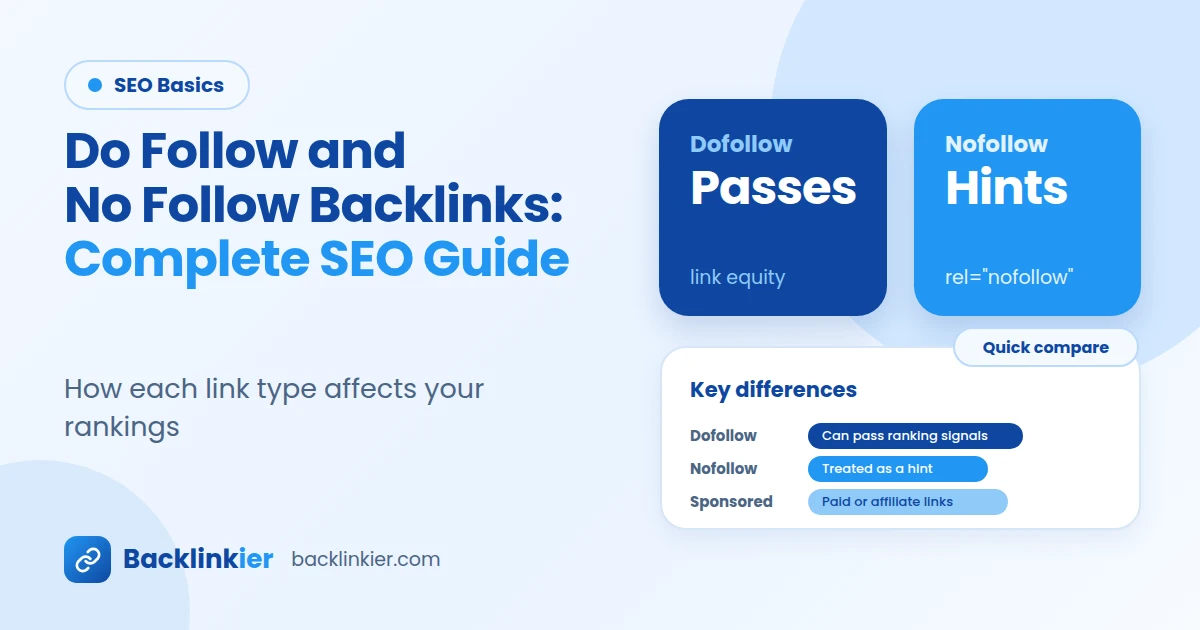
Do follow and no follow backlinks are the two basic types of links pointing to your website, and the difference comes down to one thing: whether the link passes ranking credit. A dofollow link tells search engines to count the link as a vote of trust, while a nofollow link asks them not to. In this guide, you’ll learn how each type works, how dofollow vs nofollow links affect your rankings, and how to build a healthy backlink profile.
What Are Backlinks, and Why Do They Matter for SEO?
A backlink is a link from another website to yours. Search engines like Google treat these links as recommendations: when a trusted site links to you, it signals that your content is worth reading.
That’s why SEO backlinks remain one of the strongest ranking factors. But not every link carries the same weight, and that’s where the dofollow and nofollow distinction comes in.
What Is a Dofollow Backlink?
A dofollow backlink is a standard link with no special instruction attached. By default, every link on the web is dofollow unless someone adds a restricting attribute.
When a website links to you with a dofollow link, search engines can follow it, crawl your page, and pass authority from the linking site to yours. This authority is often called link juice. The more relevant, high-quality dofollow links you earn, the stronger your chances of ranking.
Example of a dofollow link in HTML:
There’s no “dofollow” tag. A link is dofollow simply because nothing tells Google otherwise.
What Is a Nofollow Backlink?
A nofollow backlink includes the rel="nofollow" attribute, which tells search engines not to pass ranking credit through that link.
Example of a nofollow link in HTML:
Website owners use this nofollow link attribute for links they don’t fully vouch for, such as paid placements, blog comments, or user-submitted content.
Dofollow vs Nofollow Links: Key Differences
| Feature | Dofollow Link | Nofollow Link |
|---|---|---|
| Passes link juice | Yes | Little to none (treated as a hint) |
| HTML attribute | None | rel="nofollow" |
| Helps rankings directly | Yes | Rarely, but can help indirectly |
| Common sources | Editorial mentions, guest posts, news | Comments, forums, ads, social profiles |
| Referral traffic | Yes | Yes |
How Does Google Treat Nofollow Links Today?
For years, Google said it ignored nofollow links completely. In 2019, that changed. Google announced that nofollow is now treated as a hint rather than a strict directive. This means Google may choose to use a nofollow link for crawling or ranking if it decides the link is valuable.
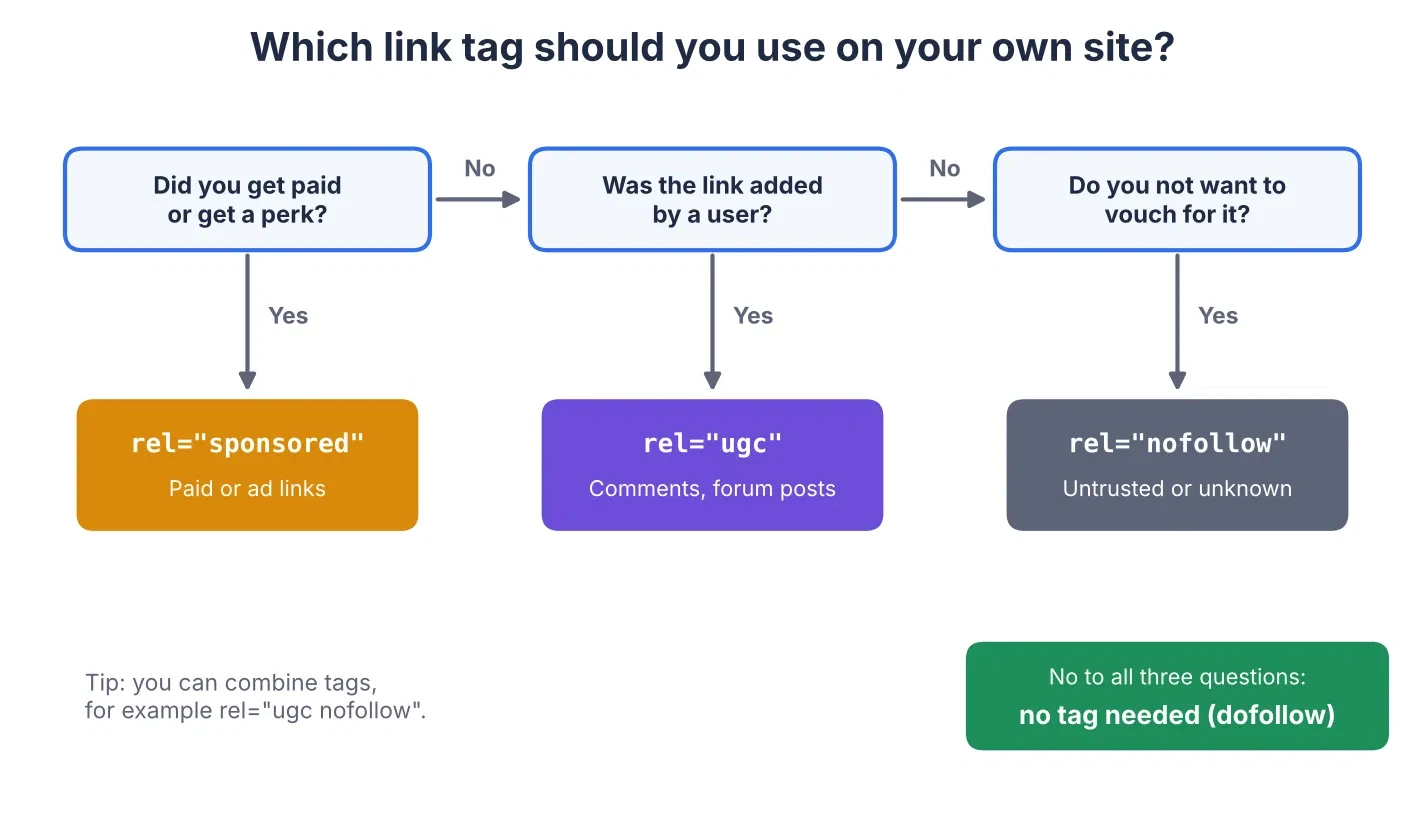
Google also introduced two more attributes:
- rel="sponsored" for paid links, advertisements, and affiliate placements
- rel="ugc" for user-generated content like comments and forum posts
Together, these are known as sponsored and UGC links, and they give site owners more precise ways to label links honestly.
Do Nofollow Backlinks Have Any SEO Value?
Yes, though not in the way many people expect. Even if a nofollow link passes little or no direct ranking power, it can still help you in several ways:
- Referral traffic: Real visitors can click through, regardless of the attribute.
- Brand awareness: Mentions on high-authority sites put your name in front of new audiences.
- A natural backlink profile: A profile made up of 100% dofollow links looks suspicious. Real websites earn a mix of both.
- Indirect benefits: A nofollow link from a popular article can lead to other writers discovering you and linking back with dofollow links.
Which Is Better: Dofollow or Nofollow?
Dofollow links are better for passing ranking authority, but you need both. Think of dofollow links as the engine of your SEO and nofollow links as the proof that your growth looks organic.
There’s no perfect ratio. Most healthy websites have a majority of dofollow links, with a solid share of nofollow links from social platforms, forums, and directories. Focus on quality and relevance, not on hitting a magic percentage.
How to Check Nofollow Links
Wondering how to check nofollow links on any page? You have three easy options:
- Inspect the page: Right-click the link, choose “Inspect,” and look for
rel="nofollow",rel="sponsored", orrel="ugc"in the code. - Use a browser extension: Tools like NoFollow extensions highlight nofollow links in a different color as you browse.
- Use an SEO tool: Platforms like Ahrefs, Semrush, and Moz show whether each backlink pointing to your site is dofollow or nofollow.
How to Build a Strong Backlink Profile
A strong backlink profile comes from earning links, not forcing them. Here’s what works:
- Publish original, useful content. Research, guides, and data get cited naturally.
- Write guest posts for relevant sites. Choose reputable blogs in your niche and offer real value.
- Get digital PR coverage. Journalists link to experts and unique stories.
- Fix broken links. Find broken links on other sites and suggest your content as a replacement.
- Stay active in communities. Forum and social links are usually nofollow, but they build visibility and trust.
Avoid buying links without the proper sponsored attribute. Google’s spam policies treat paid links that pass ranking credit as a violation, and penalties can hurt your visibility.
When Should You Use Nofollow Links on Your Own Site?
Add rel="nofollow", rel="sponsored", or rel="ugc" when you:
- Link to a source you don’t fully trust
- Include affiliate or advertising links
- Allow user comments or forum posts
- Link to a page only to reference it, not endorse it
For links you genuinely recommend, such as trusted resources and partners, leave them as regular dofollow links.
Frequently Asked Questions
What is the difference between dofollow and nofollow backlinks?
Dofollow backlinks pass ranking authority from one site to another. Nofollow backlinks carry a rel="nofollow" attribute that asks search engines not to count the link as an endorsement.
Are nofollow backlinks bad for SEO?
No. They don’t hurt your rankings, and they add diversity to your backlink profile, bring referral traffic, and build brand visibility.
Does Google follow nofollow links?
Since 2019, Google treats nofollow as a hint. It may crawl or consider the link, but it isn’t guaranteed to pass ranking credit.
Do social media links count as dofollow?
Most major social platforms use nofollow attributes on outbound links, so they typically don’t pass link juice, though they can still drive traffic and exposure.
How many dofollow backlinks do I need?
There’s no fixed number. A few relevant, authoritative dofollow links often outperform hundreds of low-quality ones.
Final Thoughts
Do follow and no follow backlinks both have a place in a smart SEO strategy. Dofollow links build authority, nofollow links build credibility and reach, and together they create a natural, trustworthy backlink profile. Focus on earning links through genuinely useful content, label your own links honestly, and let quality guide your strategy rather than chasing numbers.