Blog commenting for SEO means leaving thoughtful, relevant comments on other people's blog posts to build visibility, earn referral traffic, and create blog commenting backlinks. Done well, it is a free link building strategy that also helps you build real relationships in your niche. Done badly, it looks like spam and gets deleted. This guide shows you how to do it properly, step by step.
What Is Blog Commenting for SEO?
Blog commenting for SEO is the practice of joining the discussion on blogs in your industry by adding useful comments, usually with your name and website attached. The goal is not to drop a link. The goal is to be seen as a helpful voice, which can bring readers, brand awareness, and sometimes a backlink.
It is a small part of a bigger link building plan, not a shortcut to rankings.
Does Blog Commenting Still Help SEO?
Yes, but in a limited way. Here is the honest answer:
- Most blog comment links are nofollow. Platforms like WordPress add a nofollow tag by default, so they pass little or no direct ranking value. Google has said for years that it treats such links as hints.
- Referral traffic is real. A sharp comment on a popular post can send interested readers to your site.
- Brand exposure builds trust. Repeated, helpful comments make your name familiar to bloggers and readers in your space.
- Relationships lead to links. Bloggers who notice you may later quote you, invite a guest post, or link to your work.
So think of blog commenting as networking first and link building second.
Benefits of Blog Commenting Backlinks
When you approach it with quality in mind, you can expect:
- Targeted referral traffic from people already reading about your topic.
- Better brand awareness among bloggers and their audiences.
- Natural link opportunities from relationships you build over time.
- Content ideas from questions and debates in the comments section.
- Faster discovery of new pages when a comment on an active blog gets crawled.
How to Do Blog Commenting for SEO: Step-by-Step
Step 1: Find Relevant Blogs in Your Niche
Start with blogs that match your topic. A comment on a marketing blog helps a marketing site far more than a random high-traffic blog about travel.
Try these methods:
- Search Google for your keyword plus "leave a comment" or "add a comment".
- Check which blogs your competitors are mentioned on.
- Follow industry newsletters and note the blogs they cite.
- Use tools like Ahrefs, Semrush, or Feedly to find active blogs.
Step 2: Check the Blog's Quality
Before commenting, make sure the blog is worth your time.
- It publishes fresh content regularly.
- Real people leave real comments and the author replies.
- Comments are moderated, with no flood of spam.
- The site looks trustworthy and relevant to your industry.
If the comment section is full of "great post, nice blog" messages with links, skip it.
Step 3: Read the Post Fully
This sounds obvious, yet it is the step most people skip. Read the whole article so your comment proves you actually did. Note one idea you agree with, one you would add to, or one question you still have.
Step 4: Write a Comment That Adds Value
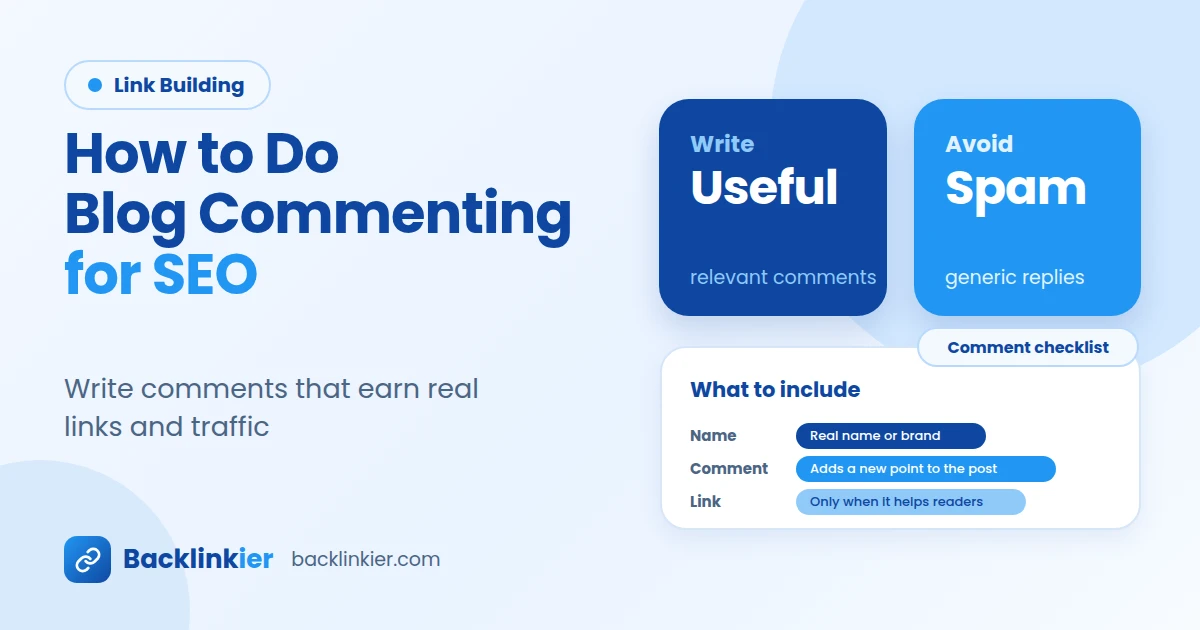
A good comment does at least one of these things:
- Adds a short personal experience or example.
- Shares a useful tip the article did not cover.
- Asks a smart, specific question.
- Respectfully offers a different view with a reason.
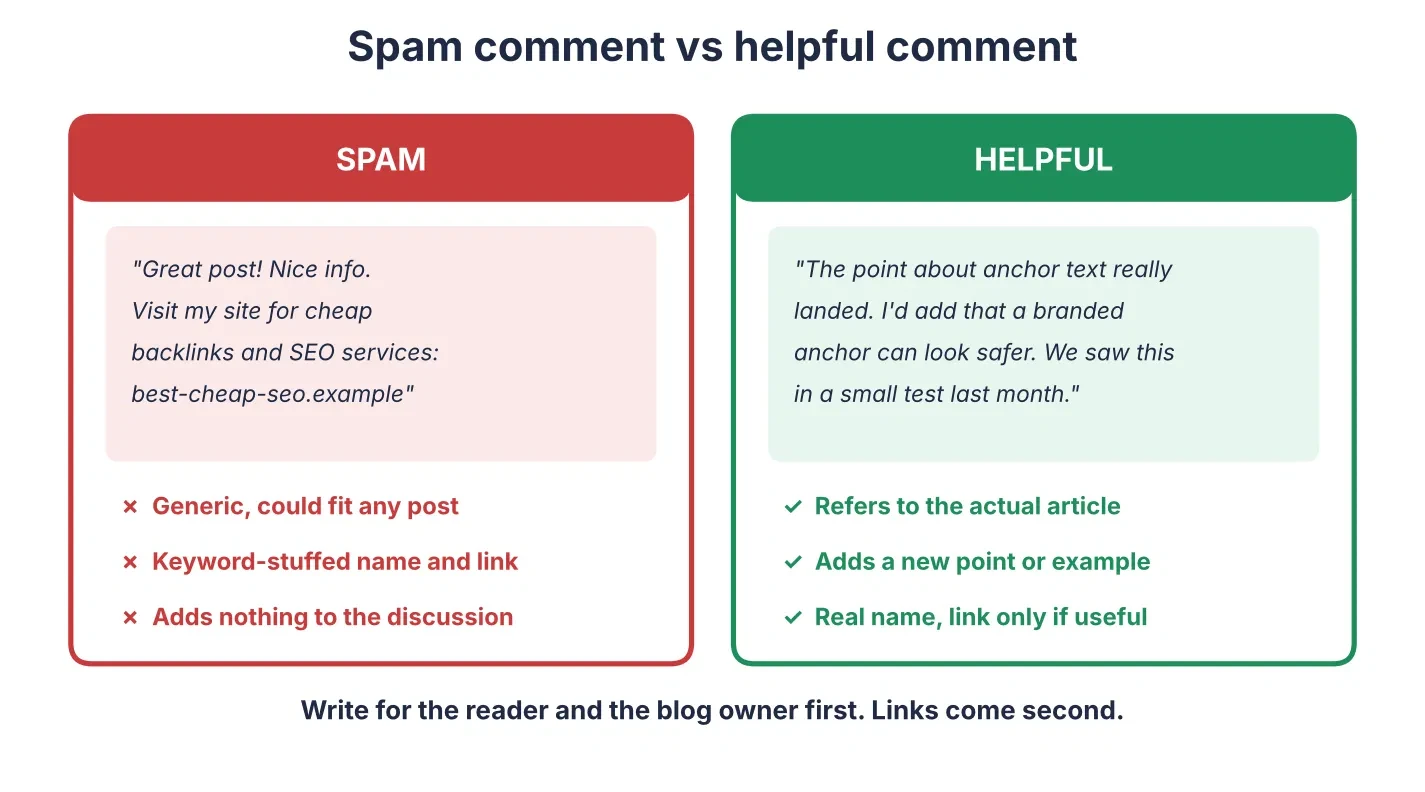
Example of a weak comment: "Great article! Visit my site for more tips."
Example of a strong comment: "I tried the internal linking method you described on a 40-page site, and our category pages gained clicks within a month. One thing I would add is to update older posts with links to the new ones. Have you seen that work better than linking only from new content?"
The second comment reads like a human wrote it, because one did.
Step 5: Use Your Real Name and the Right Link
Use your real name or brand name, not a keyword. Stuffing a keyword like "cheap SEO services" into the name field is a fast way to get flagged as spam. Add your website in the website field, and avoid placing links inside the comment body unless the blog allows it and the link truly helps the reader.
Step 6: Be Early and Be Consistent
Comments posted soon after publication get seen more. Set aside a short time each week to comment on three to five relevant posts instead of mass-commenting once a month.
Step 7: Come Back and Reply
If the author or another reader responds, reply. Conversations are where relationships form, and relationships are what eventually turn into quality backlinks.
Dofollow vs Nofollow Blog Commenting
Nofollow links tell search engines not to treat the link as an endorsement. Most blog comment links are nofollow.
Dofollow links can pass ranking signals. Some blogs and plugins allow them, but they are rare and often attract spam.
Do not choose blogs only because they offer dofollow blog commenting. A relevant nofollow link from an active, respected blog is worth more than a dofollow link from a spam-filled site.
Blog Commenting Mistakes to Avoid
- Dropping links with no context. It reads as spam and gets removed.
- Using automated tools or bots. Google's spam policies target link spam, and automated comments are a clear example.
- Copy-pasting the same comment. Bloggers notice, and so does Google.
- Commenting on irrelevant blogs. Relevance matters more than domain size.
- Over-optimizing the name or anchor text. Keep it natural.
- Expecting instant ranking jumps. Treat it as a long-term habit.
Blog Comment SEO Strategy: A Simple Weekly Routine
You do not need hours. Try this:
- Spend 15 minutes finding new posts on three to five target blogs.
- Spend 20 minutes reading and writing thoughtful comments.
- Spend 10 minutes replying to earlier comment threads.
- Track results in a spreadsheet: blog name, URL, date, any reply, referral traffic, and links gained.
After two or three months, review which blogs sent visitors or built relationships, and focus on those.
How to Measure Blog Commenting Results
Check these signals:
- Referral traffic in Google Analytics 4 (look at the referral source report).
- New backlinks in Google Search Console or a backlink tool.
- Replies and mentions from bloggers you commented on.
- Brand searches that slowly rise as your name spreads.
Better Link Building Ideas to Pair With Blog Commenting
Blog commenting works best alongside stronger tactics:
- Guest posting on relevant blogs.
- Creating original research or useful tools others want to cite.
- Broken link building.
- Digital PR and expert quotes.
- Sharing your content on social platforms and in communities.
Frequently Asked Questions About Blog Commenting for SEO
Is blog commenting good for SEO?
It can help indirectly. Most comment links are nofollow, so they offer little direct ranking value, but they can bring referral traffic, build awareness, and lead to natural backlinks.
How do I get backlinks from blog comments?
Comment on relevant, active blogs with thoughtful, original insights, use your real name, and add your website in the website field. Quality and relevance matter more than quantity.
Are blog comment backlinks dofollow or nofollow?
Most are nofollow. A small number of blogs use dofollow comment links, but they are less common and often filled with spam.
Can blog commenting hurt my SEO?
Spammy, automated, or irrelevant comments can hurt your reputation and may be treated as link spam. Genuine, helpful comments are safe.
How many blog comments should I post per week?
Three to five high-quality comments a week is a realistic, sustainable target for most people.
Is blog commenting still worth it in 2026?
Yes, as a networking and brand-building habit. It should support, not replace, stronger link building methods.
Final Thoughts
Blog commenting for SEO is not about quick links. It is about showing up, adding value, and being remembered. Pick relevant blogs, write like a human, reply to conversations, and track what works. Over time, those small contributions can turn into traffic, relationships, and the kind of natural backlinks that actually move rankings.