As you have been researching link building tactics, you may have come across the term “resource pages” many times. The ability to locate resource pages is one of the most useful skills which you can learn as a website owner, blogger, or even an SEO professional. They can be found on every website and with proper usage they can lead to valuable links and interactions.
Resource pages don't just consist of a list of links. They are well curated collections that website owners can build to aid the readers to find tools, guides and references that are helpful. It requires a bit of work to get the right ones, but it can be well worth it as it allows you to build backlinks that have relevance and to receive genuine referral traffic.
What Are Resource Pages?
A resource page is a single page on aWebsite that has a collection of tools, links and references that can help. It's like a virtual bookshelf that a webmaster can post his/her favorite book suggestions to for the visitors to his/her site.
These pages are typically found on educational websites, industry blogs and professional organizations. These could be hyperlinks to detailed tutorials, free software, research papers, useful reading lists, or anything else. For instance, a website of digital marketing could offer a resource page of the best analytics tools, SEO guides and content strategy templates that they trust.
What you have to remember is that these pages are for real readers, and not for search engines.
Why Are Resource Pages Important for SEO?
Link building is one of the most natural and sustainable link building strategies that you can use. An optimized resource page will lead the search engines to believe that your website is a reputable and valuable resource for your niche.
These pages can attract genuine interest in your topic and get you genuine links from people who are already interested in your topic. They also assist in raising your brand awareness among a specific target audience and therefore can foster long-term relationships with other web owners.
It's important to note that not all backlinks are created equal, though. A link from a directory that is only a generic directory to sell links has a lot less value in the eyes of Google than a link from a relevant, high quality resource page. In all things quality is more important than quantity.
How to Find Resource Pages
Let's move on to the "how-to" section. The first step to understanding how to identify resource pages for backlinks is to learn how to strategically use search engines.
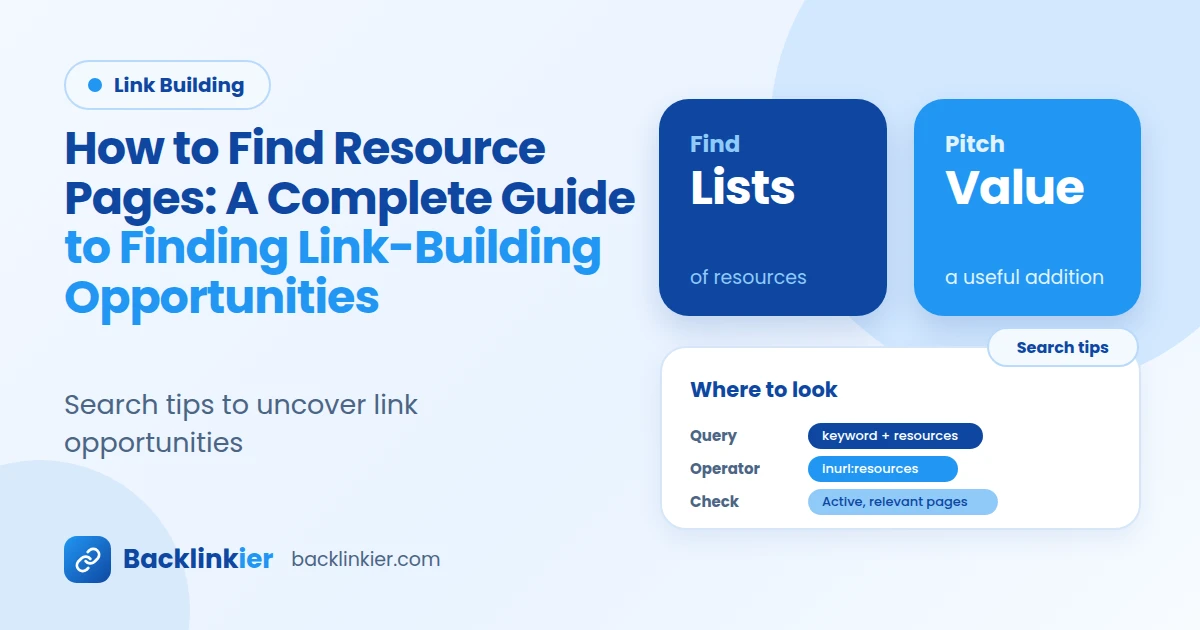
The easiest way to do this is by simply using Google search operators along with your niche keywords. Here are some suggestions for you to try right away:
- "digital marketing" + "resources"
- Content writing+Useful links
- To give the "small business" tag to the recommended websites.To tag recommended websites with "small business.
- "photography" + inurl:resources
- "fitness" + intitle:resources
These queries can be used to find website resource lists from your industry. Just replace the keywords with those of your niche.
Competitor backlink analysis is also a great way to do it. If you can see where the other people who have links to your competitor's pages got their links, you may find some resource pages that could be appropriate for you as well. You can use tools such as Ahrefs, SEMrush or Moz to find these link building opportunities quickly.
Educational institutions and industry associations are not to be missed, either. Often universities and professional groups will have a resource page for SEO that is linked to authoritative outside resources.
How to Evaluate a Resource Page Before Reaching Out
Take some time to consider the resource page that you have stumbled upon before sending out the first e-mail. Not all pages are worth the time and it can damage your reputation to get in touch with the wrong sites.
First, do a quick check to see if it is relevant. Does the page really have a connection to your content and audience? Then check the quality of the content and if the page is updated or not. If a resource page is outdated, there isn't a lot in it.
Notice how well real people respond to your performance. Are visitors to the website real users?
Are the links that are outbound to good, reputable sources? If the page is stuffed with poorly relevant or spammy links, then it may not be the page you'd like to be affiliated with.
The idea is to discover some resource pages which you would really be proud to be linked to.
How to get your site on Resource Pages" is a guide to help you get your site listed on resource pages.
How to Get Your Website Listed on Resource Pages
After discovering a potential page, you can do the following steps:
- Establish that the resource page is applicable to the material and viewers.
- Analyze current recommendations and determine the website owner's preference.
- Come up with a particular resource on your website that would be valuable to their readers.
- Do personal outreach by using their page's name in the message.
- Describe in detail how your resource would be useful to your audience.
- If you don't hear back, follow up in a week or two in a polite manner.
Remember, inclusion is not a given. Owners of websites ultimately have the final decision, and the key is to be polite, kind and patient when creating a resource page outreach.
Common Mistakes to Avoid When Finding Resource Pages
All marketers, even the experts, commit errors when trying to seek out quality backlink opportunities. Some common problems that you should avoid.
Don't visit websites that don't relate to your niche. When outreach efforts are irrelevant, it is a waste of time and hurt your credibility. Likewise, it's one of the quickest ways to be ignored when you send out emails that are copied and pasted.
Avoid thin or low quality content. If your resource does not really benefit readers, there won't be any respectable site owner linking to it. Follow website rules at all times and do not pay for manipulative link placements, or send automated spam messages. They will harm more than they help and are against the guidelines of Google.
Best Practices for Successful Resource Page Link Building
Creating quality content is always the first step in the best link building strategies. Don't go out to do outreach without something to offer.
Send personalised correspondence, such as letters. Describe particular characteristics of the resource page and how your content will relate to what's already on the page. Instead of just acquiring backlinks, concentrate on developing authentic relationships with publishers. The links seem to flow when you cater to your audience's value.
Final Thoughts
Knowing how to locate resource pages can be a beneficial asset to your general link-building strategy and will ultimately boost your site's authority. The common theme is to be relevant, valuable, and transparent and respectful in outreach.
Don't try to make quick deals, focus on developing long-lasting connections with website owners who value quality. If performed correctly, resource page link building is among one of the most natural and lasting approaches to building up the visibility of your site online.