Are comments good for SEO? Short answer: yes, when they are real, useful and moderated. Blog comments are not a direct ranking factor, but they add fresh, relevant text to a page, show that people care about your content, and give you ideas for your next article. Left unchecked, though, comment spam can turn a helpful discussion into a mess. This guide explains what Google has said about user-generated content, when comments help, when they backfire, how comment moderation works, and whether blog commenting is worth doing as a link building tactic.
Are Comments Good for SEO? The Short Answer
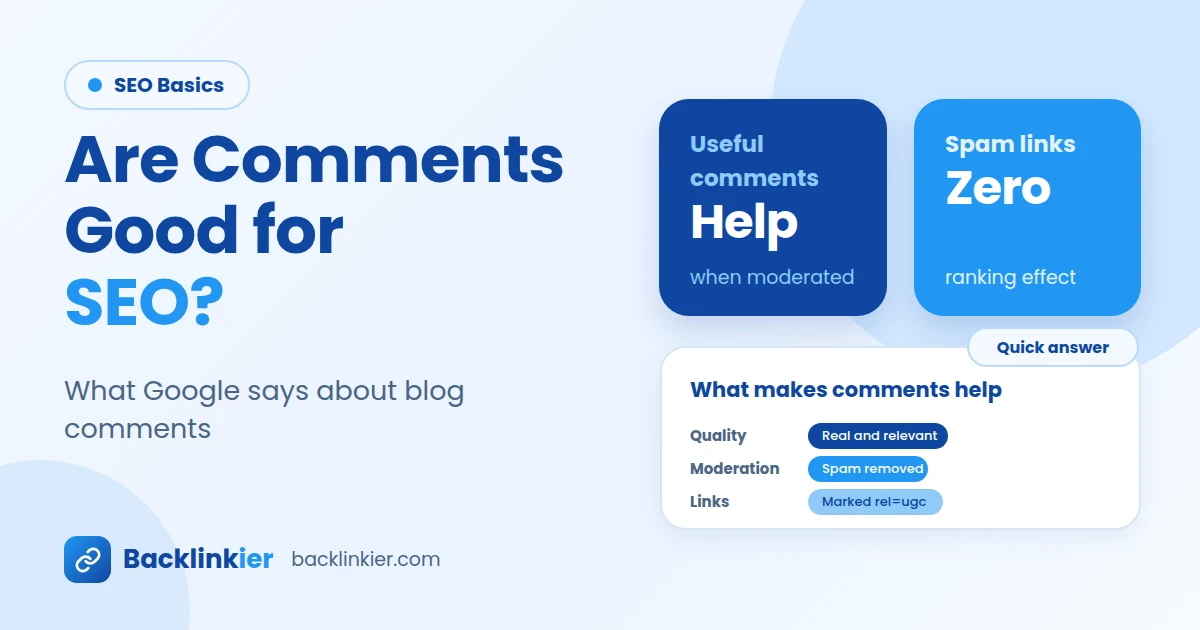
Comments can be good for SEO when they are genuine, relevant and moderated. They are not a direct ranking factor, but they add useful content to a page, encourage engagement and can bring in related search terms. Spammy or unmoderated comments add no value and can lower the quality of a page.
So the honest answer is not a simple yes or no. The comment section is part of your page, which means it either strengthens the page or weakens it depending on what is in it.
What Google Says About Blog Comments and SEO
Google has addressed this several times over the years, and its answers are consistent:
- Comments are part of the page. In a 2021 Search Central hangout, Google’s John Mueller said that removing all comments from a site can affect how it ranks, because comments are content that Google sees on the page. He did not tell site owners to keep or remove them. That decision is up to you.
- Comments can help, with conditions. In a 2022 office hours session, Mueller explained that user comments are not a ranking factor on their own, but they can add value to a page, as long as they are moderated for spam and other issues.
- Don’t noindex pages just because of comments. Mueller has also said he would rather remove spam comments and keep the good ones than block the page from search.
- Comment links are treated as user-generated. Google recommends marking links in comments and forum posts with rel=ugc, which tells it the link was added by a visitor, not by you.
- Comment spam links do not help spammers. In January 2026, Mueller said on Bluesky that links dropped into comments by spammers have no effect on rankings.
Put together, the message is clear: comments are neither a magic ranking trick nor a danger by default. Quality decides everything.
5 Ways Blog Comments Can Help Your SEO
1. They add fresh, relevant content
A good comment section keeps growing after you publish. Readers add examples, ask questions and use real-world wording that you may not have thought of. Because it lives on the page, it gives search engines more context about the topic.
2. They show real engagement
People who stop to leave a thoughtful comment are telling you the article was worth reading. Google does not publish a score for this, but pages people care about tend to keep readers on the site and encourage them to return.
3. They reveal long-tail keywords and content ideas
Comments are a free research tool. Questions like how does this work for small stores or what about mobile show you exactly what your audience is searching for. Turn the best questions into new sections, FAQs or entirely new articles.
4. They support answer engines and AI search
Search and AI tools look for clear, specific answers to real questions. When readers ask something and you reply with a direct, useful answer, you create a short, quotable passage on the page that fits how people ask questions in AI search.
5. They build community and repeat visits
A site where authors reply to readers feels alive. That can lead to returning visitors, more shares and, over time, more people searching for your brand by name.
When Comments Hurt: Comment Spam and Other Risks
Comments only help when they are worth reading. These are the situations where they do the opposite:
- Comment spam. Link drops, fake praise and unrelated promotions make a page look neglected and clutter the content search engines see.
- Thin, repetitive comments. Dozens of replies that just say great post add nothing.
- Off-topic or low-quality content. A comment section full of unrelated chatter dilutes your page’s focus.
- Slow pages. Heavy comment plugins can hurt page speed if they are not set up well.
- Embedded systems that search engines can’t read. Comments loaded inside an iframe may not be crawled, so they give you little SEO benefit.
The good news is that spam links left in comments do not help spammers, and Google does not appear to penalize you for them. The real cost is the effect on your readers and the quality of the page.
Comment Moderation: How to Keep Comments Helping Your SEO
You do not need a big team to keep comments useful. A simple routine is enough:
- Turn on approval for first-time commenters. Most spam is stopped before it appears.
- Use a spam filter. A plugin or built-in filter catches the obvious junk automatically.
- Set clear rules. A short comment policy tells readers what is welcome and what will be removed.
- Remove spam and promotional links. Delete comments that exist only to drop a link.
- Reply to good comments. Answer questions directly and thank people for useful points.
- Mark comment links as ugc. This is what Google recommends for user-generated links.
- Review regularly. Check your queue weekly, or daily for busy sites.
If a post has become a spam magnet and you can’t keep up, close comments on that specific page instead of removing them from the whole site.
Should You Use rel=ugc or Nofollow on Comment Links?
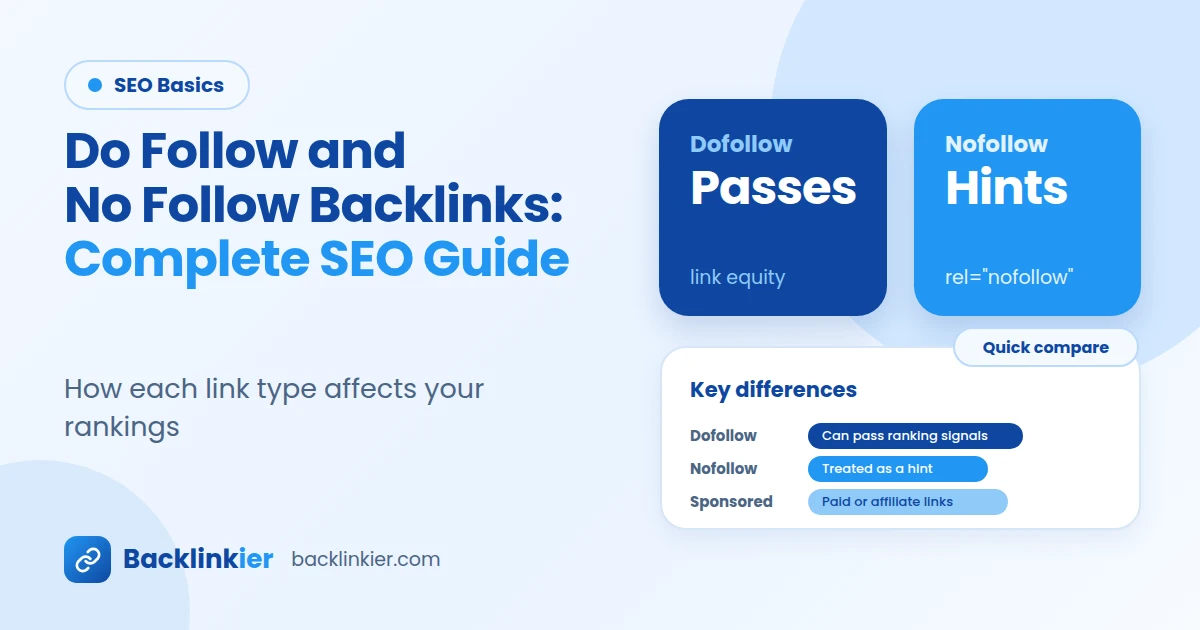
Google recommends rel=ugc for links in comments and forum posts. The older rel=nofollow value is still an acceptable signal for links you do not want to vouch for, but ugc is the more specific label. Most blogging platforms and comment plugins add one of these automatically, so check yours before changing anything.
In practice, this means links in comments rarely pass ranking credit to the commenter. That is fine for your own site, and it is also why commenting on other blogs is not a strong link building tactic.
Is Blog Commenting Good for Building Backlinks?
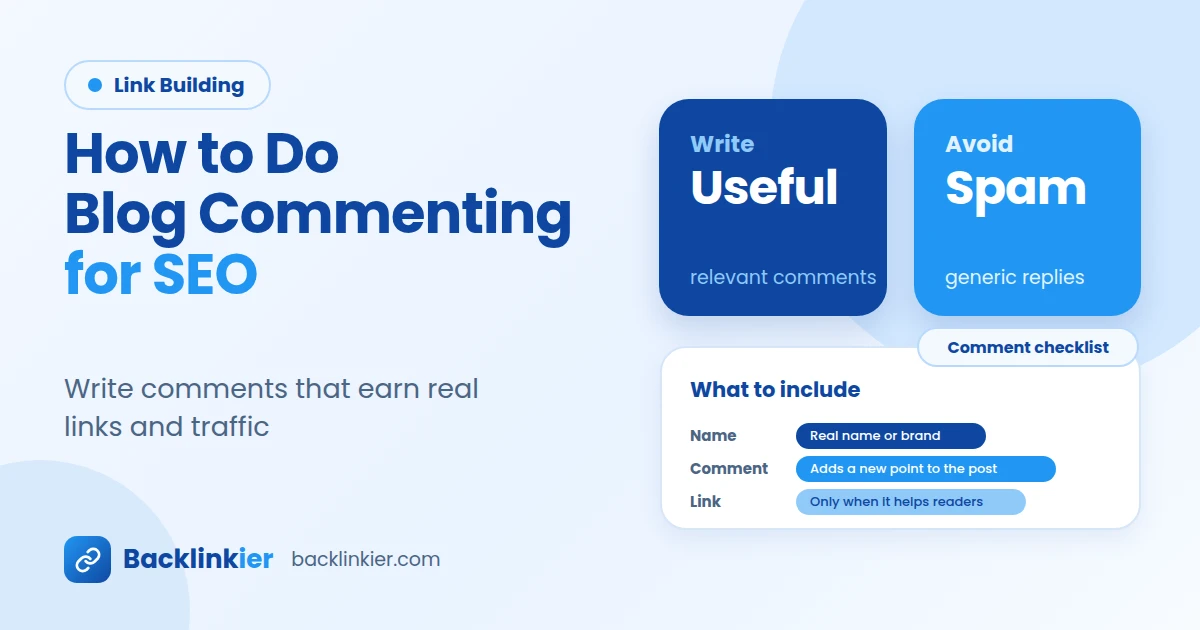
Blog commenting is the practice of leaving comments on other people’s articles. Because comment links are usually marked ugc or nofollow, they are not a reliable way to earn ranking power. Done well, though, blog commenting still has value:
- Referral traffic: a thoughtful comment on a popular post can send interested readers your way.
- Visibility: authors and readers start to recognize your name.
- Relationships: a helpful comment is often the first step toward a guest post, an interview or a mention.
If you try it, comment only where you have something to add, use your real name, and skip the sales pitch. A comment that exists only to drop a link is more likely to be deleted, and it does not help anyone.
How to Measure the SEO Impact of Blog Comments
You can see whether comments are helping your site with a few simple checks:
- Engagement: compare time on page and return visits for posts with active comments and those without, in Google Analytics.
- Search queries: look in Google Search Console for queries that match the language readers use in your comments.
- Content ideas: count how many new articles or FAQs came from reader questions.
- Moderation load: track how many comments you delete as spam. If it is high and rising, tighten your filters.
Give it a few months and compare similar posts so you are looking at real patterns, not one-off spikes.
FAQs About Are Comments Good for SEO
Are comments good for SEO?
Yes, when they are genuine, relevant and moderated. Comments are not a direct ranking factor, but they add fresh content, show engagement and can reveal useful keywords. Spam or low-quality comments add no value.
Do blog comments help rankings?
Not directly. Google has said comments are not a ranking factor on their own, but they are part of the page, so useful comments can add value and removing all of them may affect how a page performs.
Can comment spam hurt my SEO?
Google has said spammy links in comments have no effect on rankings, so they are unlikely to bring a penalty. They can still make your page look neglected, so keep them moderated.
Should I use nofollow or ugc on comment links?
Google recommends rel=ugc for links in comments and forum posts. Nofollow is still acceptable. Many platforms add one automatically.
Is blog commenting worth it for backlinks?
Not as a primary link building strategy, because most comment links are nofollow or ugc. It can still bring referral traffic, visibility and relationships if you leave thoughtful comments.
Should I turn off comments on my blog?
Only if you cannot moderate them. If you can, keeping good comments is generally better than removing them. If a single post attracts spam, close comments on that page instead.
Final Thoughts on Comments and SEO
So, are comments good for SEO? They can be, as long as you treat the comment section as part of your content, not an afterthought. Keep it moderated, answer real questions, label links properly and ignore the myths about spam penalties and magic backlinks. A small, well-run conversation under a good article is worth more than a hundred empty comments.