
Most e-commerce websites fail to rank.
Not because their products are bad, but because no one is linking to them.
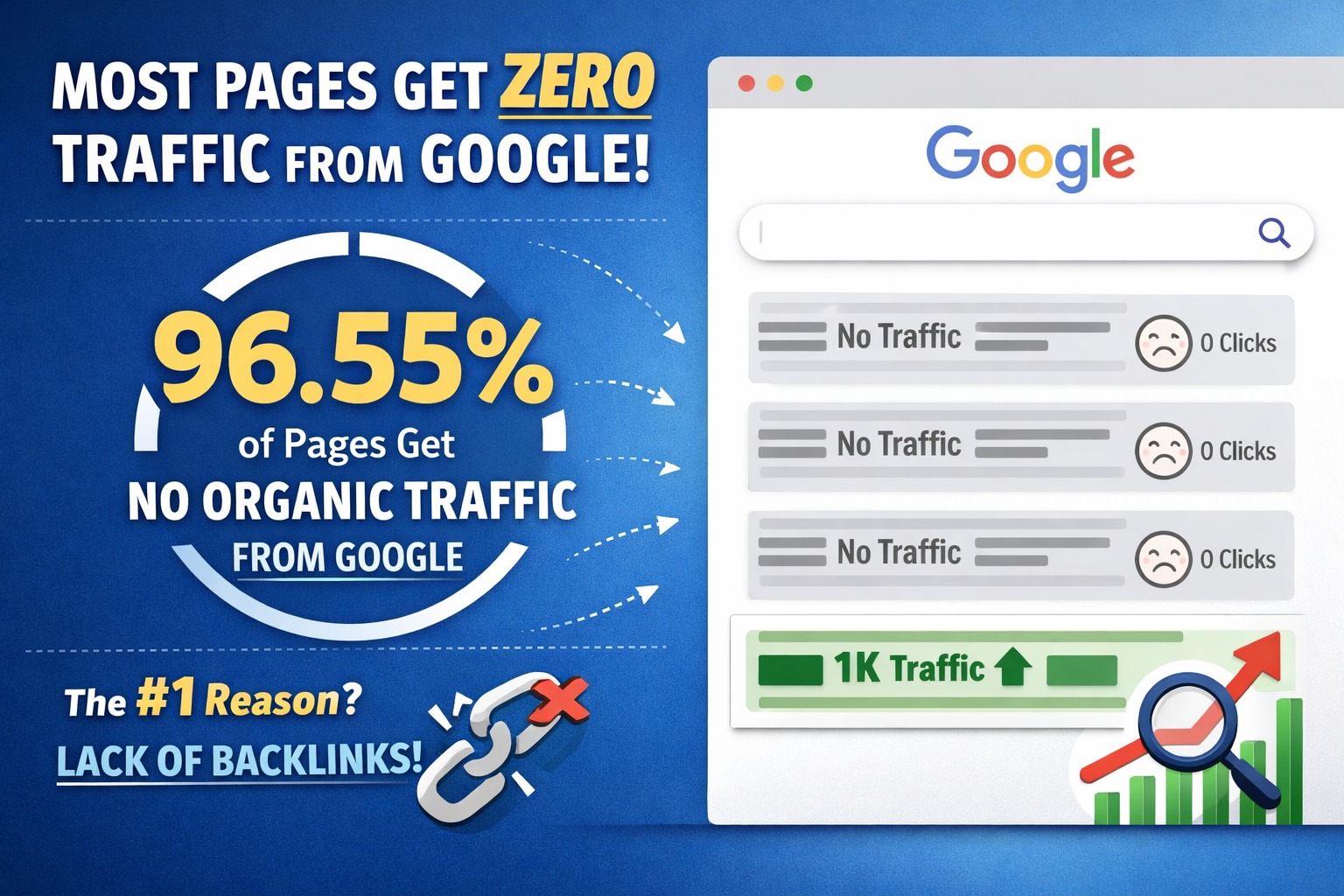
In fact, studies consistently show that around 96.55% of pages get zero organic traffic from Google, mainly due to a lack of backlinks.
That means even if you have the best products, your store can stay invisible without a solid link-building strategy.
That’s exactly why I’m writing this guide.
If you’re struggling to build authority, outrank competitors, or even get your first few backlinks, this article will walk you through what actually works in 2026.
No outdated tricks, no fluff.
Let’s break down the most effective strategies to help you rank higher and grow your eCommerce store.
Before we dive into the strategies, it’s important to understand one thing:
Link building for e-commerce websites is very different from blogs or service sites.
You’re not just building links to content.
You’re building links to product pages, category pages, and commercial assets.
That requires a smarter, more strategic approach.
Now let’s get into the proven methods.
Product and category pages are designed to convert, not to attract backlinks.
That’s why you need supporting content that naturally earns links.
Create assets like:
These pieces attract bloggers and publishers looking for credible references.
Over time, they become a foundation for earning powerful backlinks that also pass authority to your money pages through internal linking.
The skyscraper technique still works.
But only if you go beyond just “longer content.”
Find top-performing pages in your niche, then:
Once your content is clearly better, reach out to websites already linking to the original.
In the e-commerce industry, this works extremely well because many existing resources are outdated or thin.
One of the smartest ways to approach link building for e-commerce websites is to analyze what’s already working.
Use tools like Ahrefs to:
Then replicate those links by reaching out to the same sites.
This removes guesswork and helps you build links for an e-commerce website faster and more efficiently.
Guest posting remains a core white hat SEO strategy.
But quality matters more than ever.
Instead of mass posting, focus on:
Well-written guest posts not only build links but also position your brand as an authority in your niche.
People trust reviews more than ads. That’s why product-based outreach is so effective.
Reach out to:
Offer free products or samples in exchange for honest reviews.
These often include backlinks and can drive targeted traffic alongside SEO benefits.
Most store owners focus only on the homepage or blog content, ignoring category pages.
But category pages target high-volume keywords and can generate massive traffic.
To build links to them:
This strategy strengthens your site’s commercial pages directly.
Resource pages are curated lists of useful tools, products, or websites.
Search for:
Reach out and pitch your store as a valuable addition.
These are often the easiest links for e-commerce SEO.
Because the site owner is already looking to include helpful resources.
Digital PR is one of the most powerful ways to earn high-authority backlinks.
You can:
Then pitch your story to journalists and bloggers.
This approach helps you earn powerful backlinks from authority sites that are hard to get through traditional outreach.
Broken link building is simple but effective.
Find pages in your niche with broken outbound links, then:
Since you’re helping the site owner fix an issue, your success rate is often higher than cold outreach.
If you treat link building as a one-time transaction, it becomes harder.
Instead, focus on building long-term relationships with:
Engage with their content, share their posts, and collaborate.
Over time, this makes link building for the e-commerce industry more natural and scalable.
Content that is easy to reference gets shared more.
Examples include:
When done right, these assets attract backlinks passively over time, reducing the need for constant outreach.
Platforms like HARO connect journalists with experts.
By responding to relevant queries, you can:
These links are highly trusted by search engines and can significantly boost your rankings.
Many websites may mention your brand without linking to it.
Use tools to track mentions, then:
Since they already know your brand, conversion rates are high.
This is one of the simplest ways to gain backlinks.
Internal links don’t just help users.
They help search engines understand your site structure.
Use them to:
A strong internal linking strategy supports all your external link-building efforts.
Getting hundreds of low-quality links won’t help—and can even hurt your rankings.
Instead, prioritize:
A few high-quality backlinks will always outperform large volumes of spammy ones.
This is the foundation of sustainable white hat SEO.
Link building for eCommerce isn’t about shortcuts; it’s about building authority the right way.
By focusing on quality strategies like:
You can create a system that consistently brings in links and improves rankings.
Start small, stay consistent, and focus on what actually adds value.
Because in the end, the brands that win in SEO aren’t just building links, they’re building trust.