
Backlinks still play a major role in rankings.
But the way you build them matters more than ever.
Many beginners focus only on getting links.
They don’t think about how those links are built.
And that’s where problems start. what is white hat vs black hat link building
Because not all link-building strategies are safe.
Some help your website grow steadily.
Others can get your site penalized or even removed from search results.
This is exactly where white hat SEO and black hat SEO come in.
According to Google’s Search Essentials guidelines, websites that try to manipulate rankings through spammy link practices can face manual actions or algorithmic penalties.
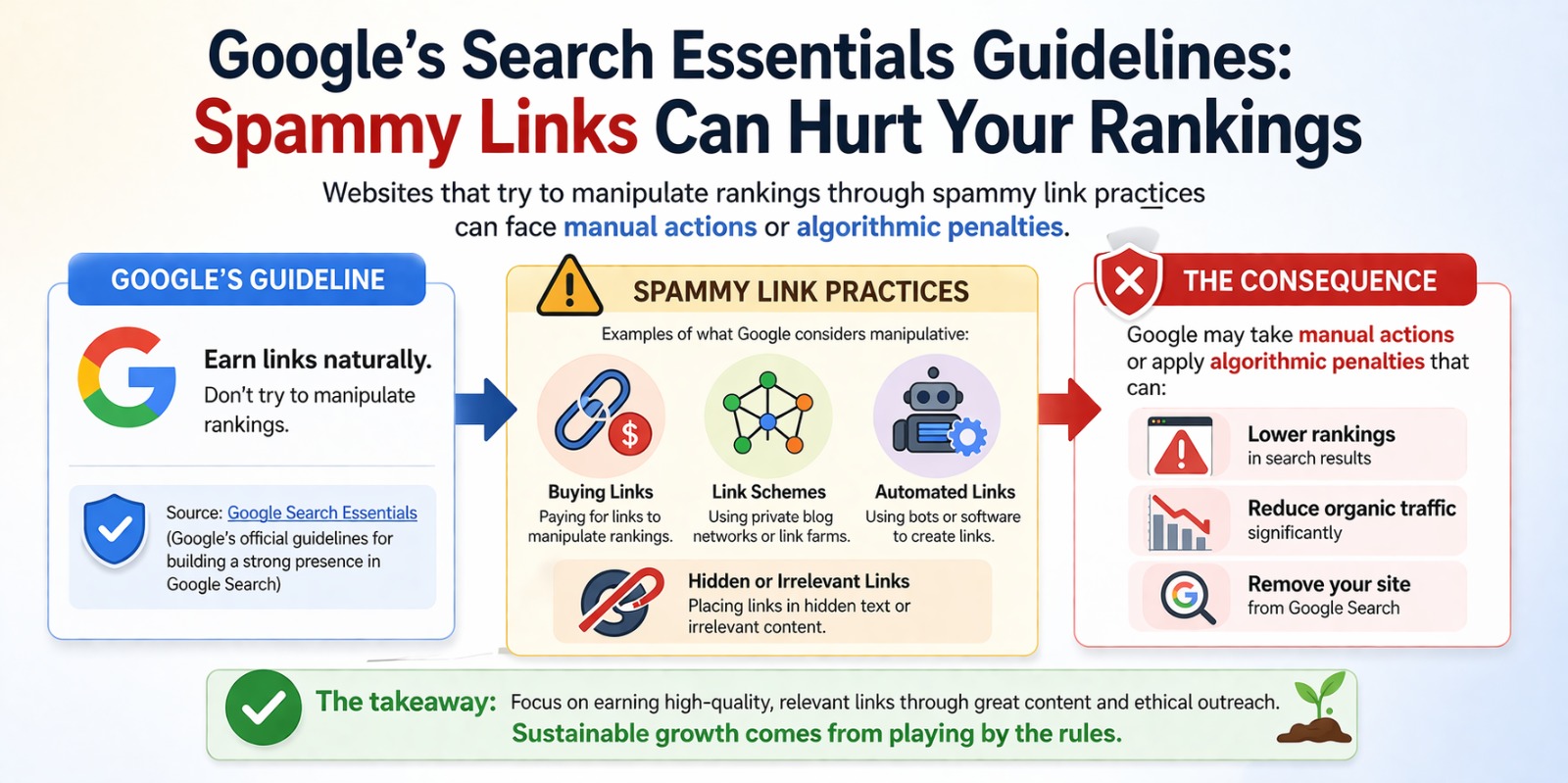
Now look at this.
A study by Ahrefs found that over 90% of web pages get no organic traffic, mainly because they lack high-quality backlinks.
See! It’s not just about backlinks.
It’s about how you build them.
White hat SEO is the process of optimizing your website using methods that follow Google’s guidelines.
It focuses on long-term growth rather than quick wins.
Instead of manipulating search engines, white hat SEO improves your website by creating value for users.
This includes:
When other websites link to your content because it is genuinely useful, that’s called white hat link building.
These links are powerful because they are earned, not forced.
In fact, Google has clearly stated that links should be “editorially placed” and not artificially created.
That’s why white hat SEO builds trust over time.
And trust leads to stable rankings.
Black hat SEO is the opposite approach.
It focuses on manipulating search engine algorithms to get faster rankings.
Instead of earning links, it tries to create them artificially.
Common black hat techniques include:
At first, these tactics may seem effective.
Some websites do see quick ranking improvements.
But here’s the problem.
Google’s algorithms, including Penguin, are designed to detect unnatural link patterns.
And when they do, rankings drop.
Sometimes overnight.
In short, black hat SEO is about shortcuts.
But those shortcuts come with serious risks.
The core difference is simple.
White hat link building earns links.
Black hat link building manipulates them.
But the real difference shows in results.
White hat strategies focus on:
Black hat strategies rely on:
A report from Backlinko found that the #1 result in Google has 3.8x more backlinks than positions #2–#10, but those links are typically high-quality and relevant.
See! It’s not just about having more links.
It’s about having the right ones.
Building links the right way takes time and effort.
That’s why many businesses turn to white hat SEO services.
But not all services follow best practices.
Good SEO services focus on:
They don’t promise instant results.
Because real SEO doesn’t work that way.
If a service guarantees hundreds of backlinks overnight, it’s usually using black hat methods.
And that can harm your site in the long run.
Not all backlinks help your rankings.
Some are highly valuable.
Others can damage your SEO.
Powerful backlinks usually come from:
These links pass strong signals to search engines and improve trust.
On the other hand, toxic backlinks come from:
According to Semrush, toxic backlinks can trigger Google penalties if they form a large part of your link profile.
That’s why regular backlink audits are important.
Because even a few bad links can affect your rankings.
Not all link building needs to start from scratch.
Broken backlinks offer a smart opportunity.
These are links pointing to pages that no longer exist.
Instead of ignoring them, you can use them to your advantage.
The process is simple:
This approach works because you’re solving a problem.
And that makes it a strong white hat strategy.
White hat SEO and black hat SEO take completely different paths.
One focuses on building trust.
The other tries to manipulate systems.
White hat link building uses relevant backlinks, powerful backlinks, and real content to grow rankings over time.
Black hat SEO may deliver quick results, but those results rarely last.
See! Search engines are constantly improving.
And they reward websites that follow the rules.
If you want long-term success, focus on white hat SEO.
Avoid toxic backlinks.
Use broken backlink opportunities.
And build links that actually make sense.
Because in the end, sustainable SEO always wins.