
Most website owners think SEO success comes from building more backlinks.
That is only half true.
The real question is not how many backlinks you build.
It is how fast you build them.
That is called Link velocity.
And if you ignore it, even good backlinks can start looking suspicious to Google.
A sudden spike of links from nowhere can trigger spam signals. A steady flow of relevant backlinks, on the other hand, shows natural growth and trust.
This is why smart SEOs do not just focus on link quantity.
They focus on SEO link velocity.
In this guide, I’ll explain what link velocity is, why it matters, how to track your link velocity trend, and how to build backlinks safely without risking penalties.
Link velocity refers to the speed at which your website gains backlinks over time.
It measures how quickly new referring domains are pointing to your site.
For example:
If your website gains 5 backlinks this month and 50 next month, your link velocity changes dramatically.
Google pays attention to this pattern.
Because natural websites usually grow steadily.
Spammy websites often grow unnaturally fast.
That does not mean fast growth is always bad.
If your content goes viral, earns press mentions, or gets picked up through strong outreach, sudden growth can make sense.
But if a brand-new website suddenly gets hundreds of low-quality links overnight, it raises questions.
That is where positive link velocity becomes important.
Google has become smarter at understanding link patterns.
It is no longer just about whether a backlink exists.
It is about context, relevance, authority, and timing.
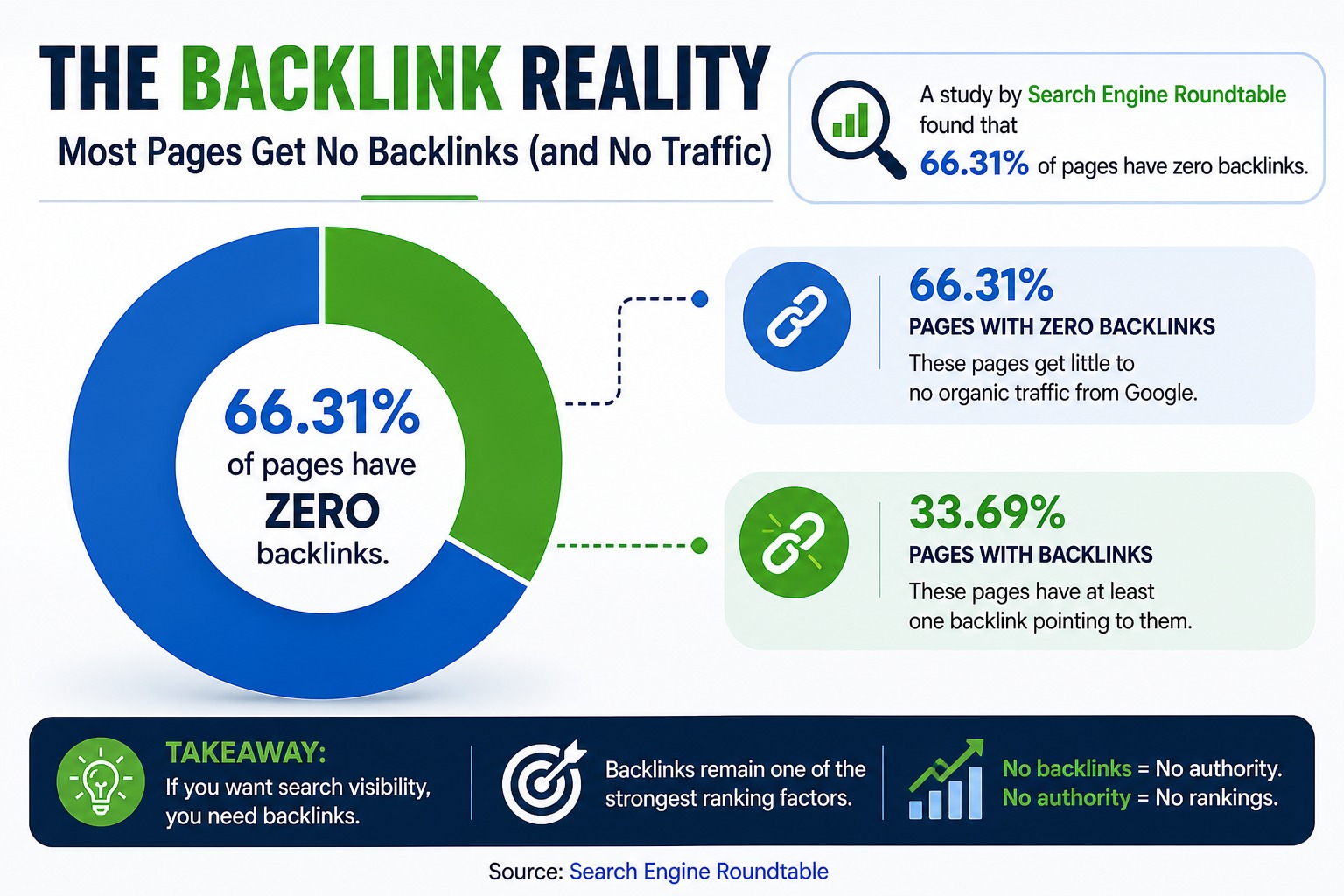
A study by Search Engine Roundtable found that 66.31% of pages have zero backlinks.
And most of those pages receive little to no search traffic.
Backlinks still matter.
But unnatural link patterns can work against you.
Google’s spam policies specifically warn against manipulative link schemes, especially unnatural large-scale link building designed to manipulate rankings.
This means your seo link velocity needs to look organic.
You want growth that feels earned, not manufactured.
That is why many websites with fewer but stronger white hat links outperform websites with massive low-quality backlink profiles.
Not all fast growth is bad.
The goal is not slow growth. The goal is believable growth.
Positive link velocity happens when backlinks increase naturally because of:
This type of growth supports rankings because it aligns with real visibility.
Bad link velocity usually comes from:
This creates patterns that search engines can flag.
Google does not hate fast growth.
It hates fake growth.
Before building more links, you need to understand your current link velocity trend.
This shows whether your backlink profile is growing naturally or aggressively.
You should check:
This is where a good seo link velocity tool helps.
Platforms like Ahrefs, Semrush, and Majestic allow you to monitor backlink growth patterns over time.
You can also compare your site against competitor backlinks.
This is one of the smartest SEO moves beginners ignore.
Because the safest growth pattern is often already visible in the websites ranking above you.
Many people ask:
“How many backlinks do I need?”
The better question is:
“How many backlinks do my competitors have?”
If the top-ranking page gained 15 strong referring domains over 3 months, trying to build 300 links in one week is not a strategy.
It is a risk.
Competitor backlink analysis helps you understand:
Instead of guessing, you follow proven ranking patterns.
That makes your link velocity smarter and safer.
The safest way to improve rankings is through white hat links.
These are backlinks earned through value, relevance, and real editorial placement.
Examples include:
These links support positive link velocity because they look natural.
They also tend to be more powerful than dozens of weak links.
A single contextual backlink from a trusted niche website can outperform 50 irrelevant backlinks.
That is why relevant backlinks matter more than volume.
For many businesses, manual outreach takes too much time.
This is where a professional link-building service can help.
But quality matters.
A real service focuses on:
Bad service sells “1,000 backlinks overnight.”
That is not SEO.
That is a future penalty.
Always ask how links are acquired.
If the answer sounds too easy, it usually is.
Good SEO takes strategy.
Not shortcuts.
Safe backlink growth is about consistency.
Not speed alone.
Here are simple rules:
Build monthly, not randomly: Consistent backlinks every month look healthier than sudden bursts followed by silence.
Prioritize relevant backlinks: Topical relevance helps links carry more ranking power and keeps your profile natural.
Diversify anchor text: Avoid using exact-match keywords on every link.
Use branded, generic, and partial-match anchors.
Monitor lost links: Sometimes rankings drop because backlinks disappear.
Tracking link loss matters as much as tracking link gains.
Compare with competitors: Your best benchmark is always the pages already ranking.
This keeps expectations realistic.
So, what is link velocity?
It is the pace of your backlink growth.
And in modern SEO, pace matters almost as much as the links themselves.
A healthy link velocity shows trust.
A reckless one creates suspicion.
The goal is not to build backlinks fast.
It is to build them naturally.
Positive link velocity, strong white hat links, relevant backlinks, and smart competitor analysis create long-term rankings.
Because SEO is not won by the loudest website.
It is won by the most trusted one.