One of the most powerful SEO ranking factors is backlinks. As mentioned, the backlink is a link that connects two websites and is considered a sign of trust and authority by search engines such as Google. If good sites link to your page, then Google thinks that your page is important and will rank it higher.
Hence, a lot of site owners and marketers attempt to accelerate their SEO improvement by purchasing backlinks. The concept is straightforward: rather than waiting for organic links, you get pay-for-placement links on various sites. But this strategy can also raise rankings—with the downside that it can be detrimental if it’s not done right.
In this article, we’ll discuss what buying links means, the kinds of links you can acquire, the dangers, and how you can buy back links safely if you choose to do so.
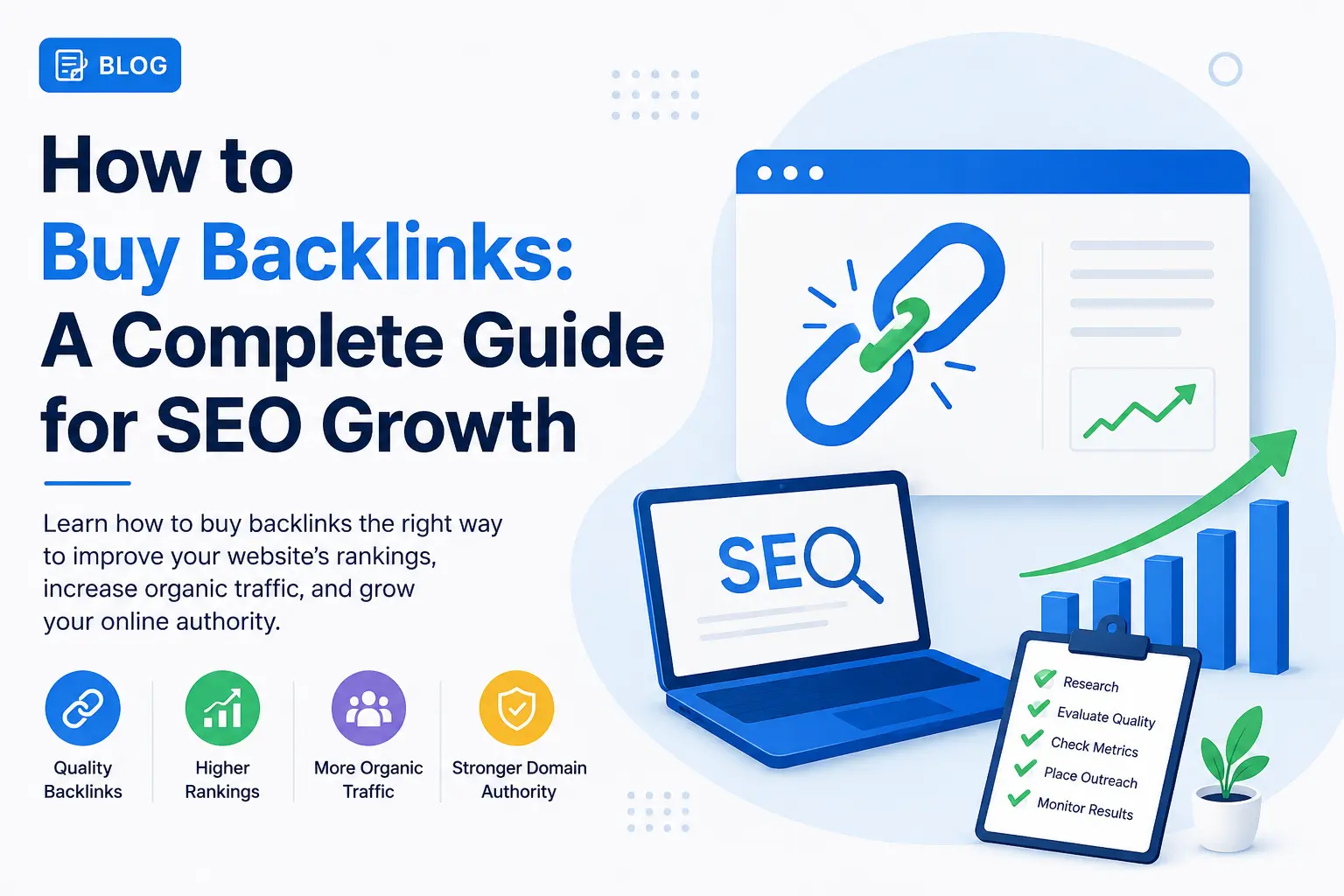
Purchase of backlinks is the act of paying a website owner, blogger or SEO service in order to get a link to your site. These are typically placed in blog posts, articles or sponsored content.
The aim is to build your website’s reputation and boost ranking on search engines such as Google. Google Search Engine guidelines, however, state that if you’re using a paid link intended to rank them, that can be considered a violation, unless it is “sponsored” or “nofollow.”
Nonetheless, this practice is still prevalent in the SEO business.
There are multiple kinds of paid backlinks that SEO experts are generally using:
One of the most popular is a guest posting. Here, you will pay to have an article published on another website, which will link back to your site.
If done on relevant, high-quality websites, guest post backlinks can be effective and relatively safe.
Niche Edits are when you embed your backlink inside of an existing published article on a site. The backlink can transfer SEO value quicker as the article is already indexed and has authority.
However, relevance is very important. A link embedded in content that is not related can seem unnatural.
Private Blog Network: A network of websites actually developed to sell back links. Such websites are frequently created to game search engines.
The problem with PBN backlinks is that they are potentially hazardous and Google Penguin Algorithm or other spam detection systems can penalize PBN networks.The downside of using PBN backlinks is that they can be risky as Google Penguin Algorithm or other spam detection systems could penalize the PBN networks.
Sponsored links are sponsored posts that are clearly labeled as such on the website. When they include something like “nofollow” or “sponsored,” these links are more in line with Google’s guidelines.
While link building may help improve the rankings, it is not without risk. Before putting your investment money into it, it’s important that you know the risks.
Google actively is against unnatural link building. An unnatural or spammy backlink profile may result in a loss of rankings or penalties. It can even be taken off search results in extreme cases.
Not all backlinks are useful. A lot of paid links are from websites which have no traffic at all and have low authority. These links are not helpful to SEO efforts, and can even be damaging to your site’s reputation.
A lot of novices purchase backlinks without even taking into account the standards such as organic traffic or domain authority. This means that they invest in links that can be of little or no SEO benefit.
Google regularly updates their rankings. Although paid links work for now, they could cease to function once updates are made.
If you still choose to purchase backlinks, you will need to take a cautious approach and strategically think about the way you purchase links to minimize risk.
Always select websites which are associated with your niche. For instance, a tech web site ought to acquire back links from tech blogs, not from different lifestyle blogs.
When purchasing a backlink, employ tools such as Ahrefs, SEMrush or Moz to analyze the website. Look for:
Avoid purchasing links from skimmish black hat websites (link farms and PBNs). Such networks tend to be indexed by Google and can have a negative impact on your long term SEO.
Anchor text refers to the ‘content’ that refers to a link that can be clicked, as in the above example. Try to not use too specific of a keyword such as “best cheap SEO service.” Instead, in the case of natural variations, such as brand names or generic phrases.
Don’t solely focus on paid links. A good backlink profile would be a combination of the following:
In the past, paid links were the main focus of SEO strategies, but SEO experts prefer to use white hat methods to create links.
Create valuable content and put it up at websites that are trusted in your industry.
Write articles, research or ideas that journalists and bloggers are looking to link to.
Write quality blog posts, guides and resources that will organically attract backlinks.
Discover the best posts, make your own and push it out to other sites that link to content similar to yours.
It’s a well-known SEO tactic to purchase backlinks, but it needs to be done right. It can give fast ranking boosts, but can also be hazardous if it is not done correctly.
Search engines such as Google are getting better and better at identifying artificial link building and, consequently, paid backlinks are not sustainable.
What’s best is to use a mix of ethically-oriented link building techniques and great content. This forms a solid, natural backlink profile that will aid in lasting success.