If you want to rank #1 on Google, content alone is not enough.
You need authority.
And that’s built through backlinks.
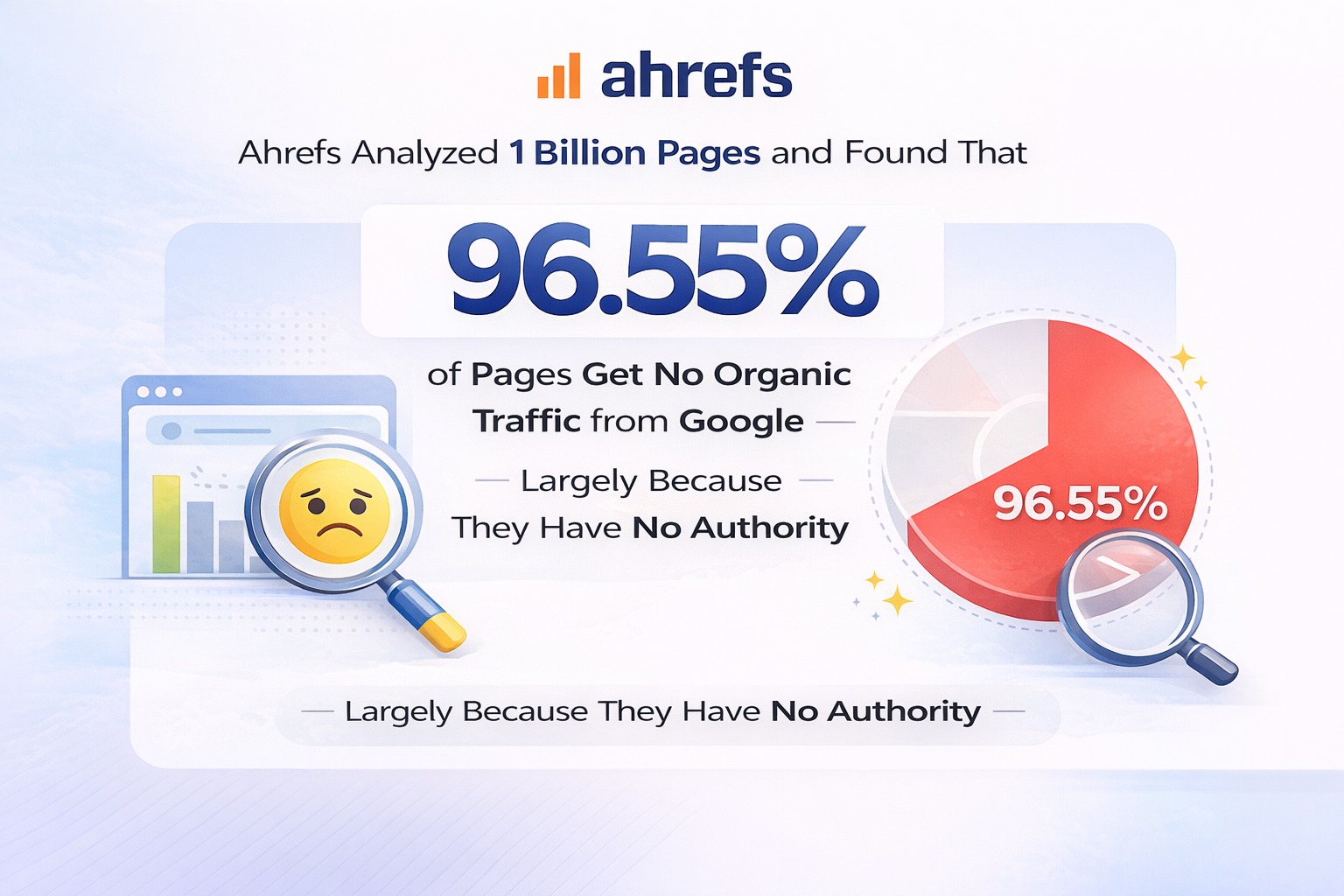
Ahrefs analyzed 1 billion web pages and found that 96.55% of pages get no organic traffic from Google. Largely because they have no authority.
But here’s the mistake most website owners make:
“They focus on quantity instead of strategy.”
See, ranking quickly is not about getting hundreds of random links.
It is about acquiring relevant backlinks, placed on trusted websites, with proper context and authority.
In this article, I’m breaking down how to get backlinks the right way.
So you can accelerate rankings without damaging your site.
Google’s algorithm has evolved.
They understand content better than ever.
But backlinks are still one of the strongest ranking signals.
Why?
Because backlinks act as votes.
When authoritative websites link to you, search engines interpret it as a shoutout.
But not all of them carry the same weight.
A link from a high-authority, niche-relevant website is worth more than 100 low-quality directory links.
Hence, if your goal is to rank quickly, you need powerful backlinks, not random ones.
Before you ask, “How to get backlinks?” ask: “What do the top-ranking pages already have?”
Use SEO tools to check:
This answers a common question: “How many backlinks do I need to rank?”
The answer is simple: “You don’t need more backlinks than your competitors.”
You need better ones.
If the #1 ranking page has 35 referring domains, you don’t need 500.
You need 40 stronger, more relevant links.
Relevance is more important than volume.
If you run a SaaS website, backlinks from tech blogs carry more weight than links from unrelated niches.
Google evaluates topical authority.
That means your backlinks should:
Relevant backlinks strengthen topical trust and help you move faster in SERPs.
Irrelevant backlinks slow you down.
Or worse, trigger penalties.
The fastest way to rank is through contextual editorial backlinks.
These are links placed naturally inside high-quality articles on real websites.
They:
This is where professional outreach matters.
Many businesses ask, how to sell backlinks as a publisher or how to acquire them as a brand.
The reality is that ethical backlink acquisition requires relationship-building, content quality, and controlled placements, not spam.
Agencies specialize in securing placements on established websites that already have domain strength and real traffic.
That accelerates rankings safely.
Getting 50 backlinks in one week when your website previously had none looks unnatural.
Ranking quickly does not mean building aggressively. It means building strategically.
A steady flow of high-quality backlinks signals organic growth.
Search engines reward natural link velocity.
Anchor text influences keyword ranking. But over-optimization is dangerous.
A natural backlink profile includes:
If every backlink uses your exact target keyword, it raises red flags.
Balance is critical when building powerful backlinks.
Monitoring your backlink profile is just as important as building it.
You should regularly:
Understanding how to find backlinks to your website helps you measure progress and spot gaps.
Professional backlink services often provide reporting dashboards to track authority growth over time.
If someone offers 1,000 backlinks for $20, you are not buying SEO.
You are buying risk.
Spam links from:
Shortcuts rarely lead to position #1. Only real authority does.
The formula is clear:
When executed properly, rankings can improve significantly within weeks.
Especially for low to medium competition terms.
Backlinks remain the backbone of SEO.
But they must be earned or acquired, only with strategy.
If you truly want to rank #1 quickly, stop chasing links in quantity.
Start building authority.
Relevant backlinks build trust.
Powerful backlinks build rankings.
Strategic placements build momentum.
SEO is competitive.
But with the right backlink strategy, moving to the top is not luck. It is leverage.