Editorial links are not placed at random.
These are thoughtful choices made by authors and editors who think your material benefits their readers.
That distinction is important.
Because in SEO, the links that improve rankings are earned rather than forced.
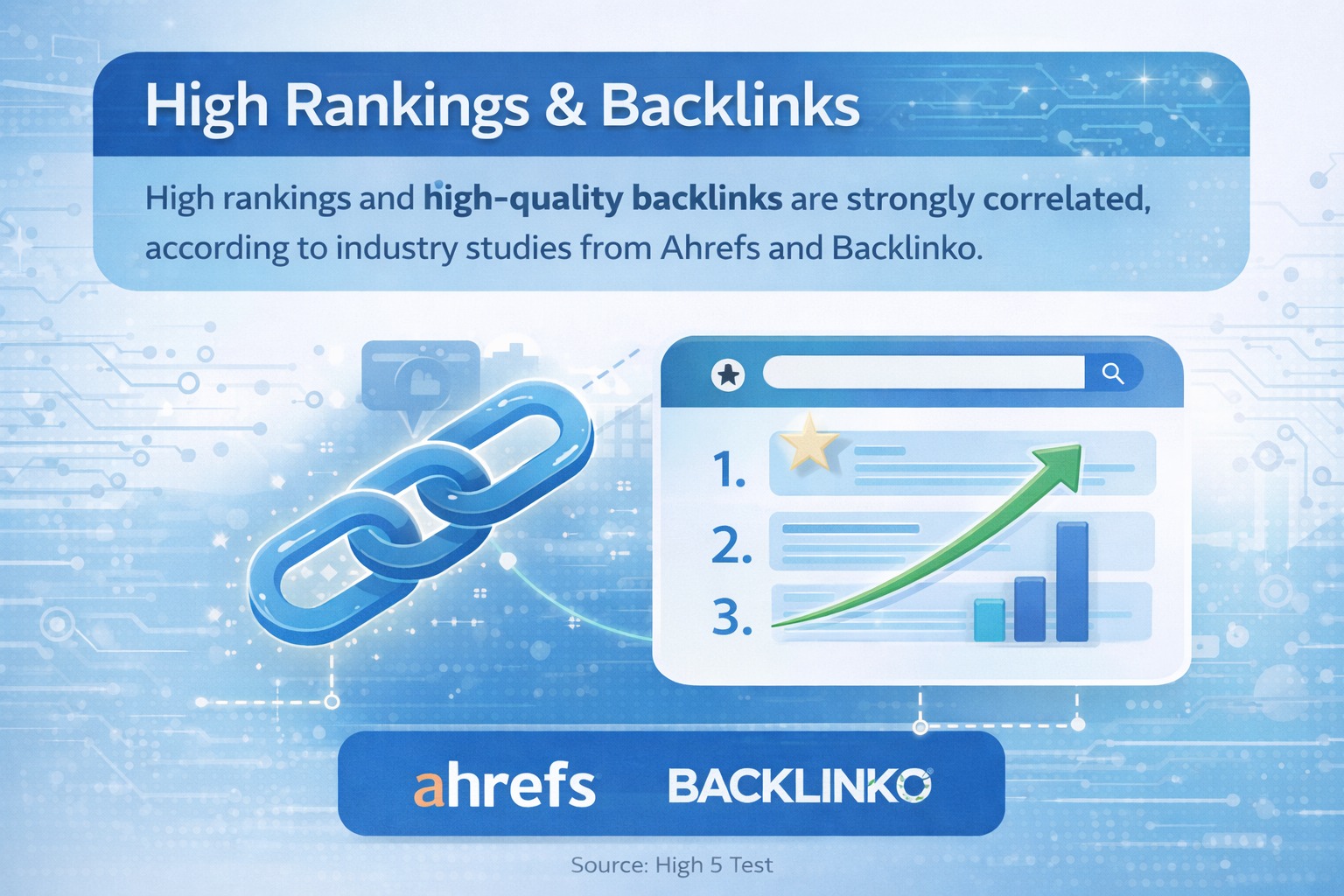
High rankings and high-quality backlinks are strongly correlated, according to industry studies from Ahrefs and Backlinko.
However, what most people fail to notice is this:
More important than quantity is the kind of backlink.
Editorial Links are unique in this regard.
Editorial links are links that are organically inserted into content by bloggers, journalists, or editors without overt indications of sponsorship. They exist because your material backs up their claims, offers information, or clarifies a point more thoroughly than other sources.
They become effective backlinks as a result.
They convey trust, topical authority, and contextual relevance. Search engines are informed that your content merits attention when an editor mentions your page in a pertinent article.
This is completely different from directory submissions and bulk placements.
One is chosen.
The other is inserted.
Google understands the difference.
There is a persistent myth in SEO that ranking is purely a numbers game. It isn’t.
Relevant backlinks consistently outperform large volumes of unrelated links because search engines evaluate context, not just link counts.
A backlink from a marketing publication to your SEO guide sends a strong topical signal. A link from an unrelated niche does not.
That is why Editorial Links placed inside relevant content have a compounding effect. They build authority within a specific topic rather than scattering signals across disconnected domains.
If you focus only on volume, you dilute impact.
If you focus on relevance, you strengthen it.
Most outreach fails because it focuses on asking instead of offering.
Editors link when:
If your content adds nothing new, it becomes difficult to justify a link.
That’s why understanding how to get Backlinks starts with improving the asset itself. Outreach is only effective when the destination page is worth referencing.
Agencies that consistently secure Editorial Links do not just pitch. They refine content first, identify relevant publications, and approach writers with something genuinely useful.
That shift in approach changes everything.
This question appears in almost every SEO conversation: how many backlinks do I need to rank?
The honest answer is not a fixed number.
Ranking depends on how strong your competitors are. If the top pages in your niche have 50 high-authority referring domains, you will need comparable or stronger authority to compete.
In many cases, 15 powerful backlinks from relevant publications outperform hundreds of low-quality links.
SEO is comparative. You are not chasing an arbitrary target — you are outperforming what already exists on page one.
That perspective makes strategy clearer.
Before building new links, you need to understand your current profile.
If you are wondering how to find backlinks to your website, tools like Ahrefs, SEMrush, and Google Search Console provide detailed data on referring domains, anchor text, and lost links.
But analysis goes beyond counting.
Look at:
This tells you whether your backlink strategy is strengthening your niche authority or simply increasing numbers without direction.
Without measurement, growth becomes guesswork.
For agencies, the real challenge is not just acquisition, it is positioning.
If you are learning how to sell backlinks, understand that serious clients are not buying links as standalone products. They are investing in ranking growth and long-term authority.
That means the focus should be on Editorial Links placed within relevant, high-quality content.
Selling bulk links is easy.
Selling strategic placements requires credibility.
When you position your service around powerful backlinks earned through genuine outreach, your offer feels different. It feels sustainable.
And sustainability is what brands care about.
Artificial links attempt to manipulate algorithms.
Editorial Links strengthen authority naturally because they exist within meaningful content.
Search engines evaluate patterns. When links appear in relevant articles written for real audiences, they reinforce legitimacy. They pose a risk when they show up in obvious networks or irrelevant pages.
This is why agencies that prioritize relevant backlinks through authentic outreach build stronger long-term results for their clients.
Short-term tactics may inflate metrics.
Editorial strategy builds rankings that last.
Getting Editorial Links doesn’t happen by accident. When you take a methodical approach, it becomes predictable:
Investigate backlinks from competitors; produce content that is worthy of links; find relevant publishers; tailor outreach; obtain placements; and track results.
This system compounds over time.
Editors and writers will find it easier to trust your content as a source as your authority increases. Link building becomes a scalable growth channel as a result of this trust, which raises the possibility of future placements.
Because they represent actual editorial judgment, editorial links continue to be one of the most powerful signals in SEO.
Value, relevance, and credibility are the means by which they are acquired.
If you want to achieve long-term rankings, concentrate on creating strong backlinks by inserting pertinent backlinks into high-quality content. Learn how to find backlinks to your website so you can continuously improve your strategy, as well as how to obtain backlinks strategically and determine how many backlinks you need to rank based on competition.
When executed properly, Editorial Links cease to be erratic victories.
They join a controlled growth system that brands can depend on, and agencies can deliver with assurance.