
Relevant backlinks are not optional in SEO.
They are essential now.
Search engines have always regarded backlinks as one of the strongest ranking signals.
And that’s not changing in 2026.
According to recent industry research, pages that rank at the top of Google’s search results tend to have 3.8x more backlinks than those in lower positions.
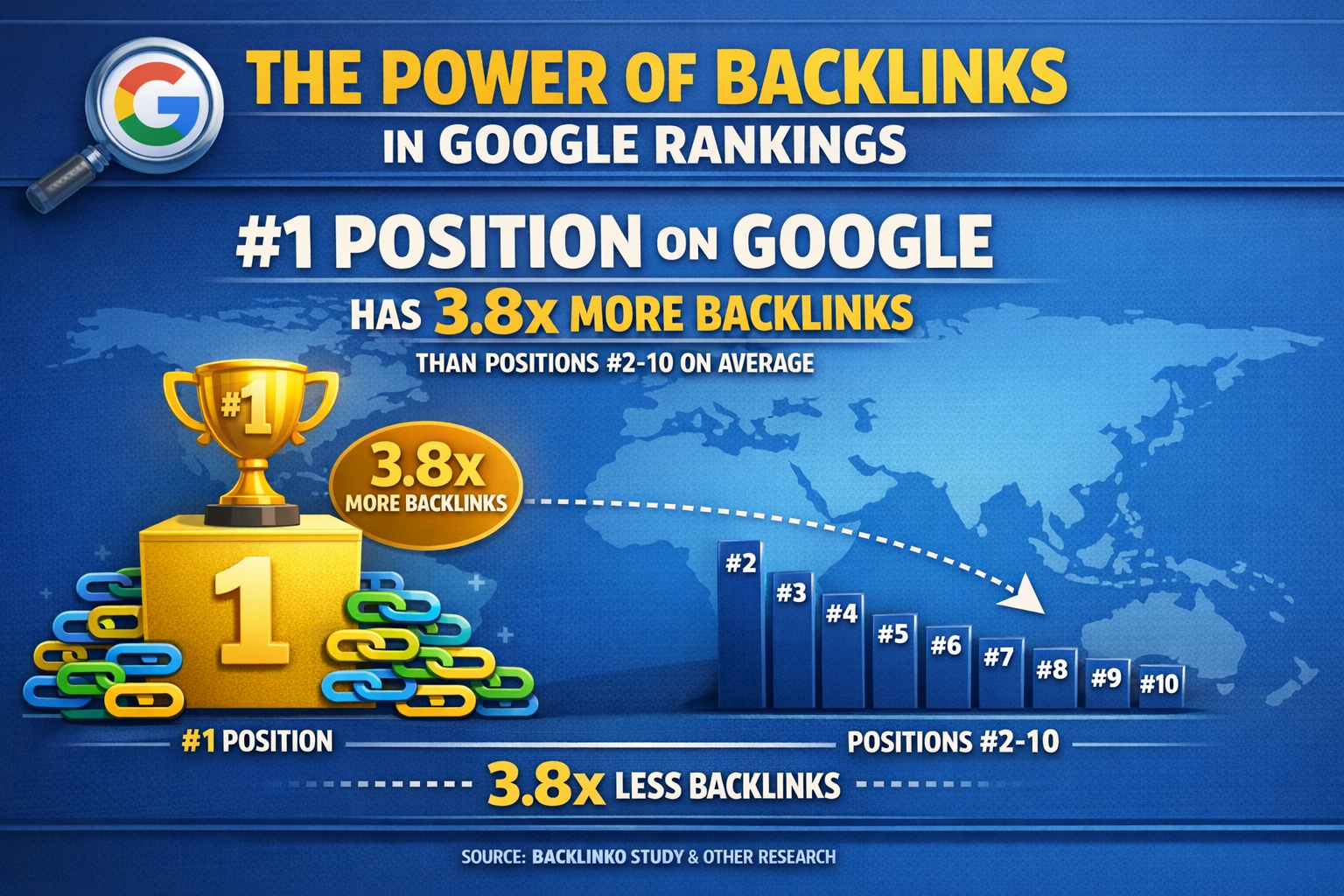
But here’s where most people go wrong: it’s not just about having links.
It’s about having relevant links.
According to Marketing Scoop, 94% of web pages have zero external backlinks at all.
This shows how rare high-quality, relevant backlinks really are.
But why does this matter?
See! Backlinks act like “votes of credibility” from other sites.
But Google doesn’t count all votes equally.
Links from topically related, authoritative pages carry far more weight than random or unrelated ones.
So, in this guide, we’ll go beyond definitions. You’ll learn:
In short, this article will show you the right way to build backlinks to boost your organic visibility.
Relevant backlinks are links that come from websites and pages closely related to your topic, niche, or industry.
In SEO, a backlink is considered relevant when:
In other words, relevance is determined by context, not just authority.
Google evaluates backlink relevance by looking at:
A link from a highly authoritative website means little if it has no connection to your page.
On the other hand, a link from a smaller but topically aligned site can carry strong SEO value.
This focus on relevance exists for a reason.
Search engines aim to reward links that help users discover related, useful information, not links that exist only to manipulate rankings.
That’s why relevant backlinks matter — and why building them requires intention, not volume.
You will not get relevant backlinks by accident.
It is determined by several clear, measurable factors.
The first is topical relevance.
When the linking website covers topics closely related to your own, the backlink carries more weight.
Search engines interpret this as a natural connection between two sources discussing similar subjects.
The second factor is content alignment at the page level.
It’s not enough for a site to be generally related.
The specific page linking to you should also match the topic of your target page.
This page-to-page relevance helps search engines understand why the link exists.
The third factor is link placement within content.
Links placed naturally inside relevant paragraphs are far more valuable than links placed in footers, sidebars, or author bios.
These in-content links are known as contextual backlinks.
Contextual backlinks signal that your page adds value to the discussion.
Because of this, they are often considered high-quality backlinks.
When topical relevance, content alignment, and contextual placement work together, backlinks become more than just links.
They become quality backlinks that strengthen your site’s authority and improve SEO performance.
Definitely! Content plays a direct role in backlink relevance.
Search engines don’t evaluate only links.
They evaluate links based on the content surrounding them.
High-quality content provides context to the search crawlers.
It explains why a link exists and how it relates to the topic being discussed.
When a backlink appears inside relevant, well-written content, it sends a strong signal to Google.
This is how Google evaluates links in context:
Links become way more valuable when you embed them naturally within meaningful paragraphs.
That’s why contextual backlinks consistently outperform links in sidebars, footers, or navigation menus.
Because those placements lack context and rarely contribute to topical understanding.
Yes, in modern SEO, link relevance matters far more than link quantity.
This shift is at the core of the quality vs quantity backlinks SEO debate.
Search engines no longer reward websites for simply collecting large numbers of backlinks.
Fewer relevant, well-placed links often outperform dozens of irrelevant ones.
Google evaluates backlinks based on:
Spammy links from unrelated websites send weak or even negative signals.
In contrast, contextual links within relevant content reinforce authority and trust.
This is why many high-authority backlinks fail to deliver results.
If a link comes from a powerful domain but has no topical connection, its impact is limited.
Quality backlinks work because they make sense.
They connect related topics, improve user understanding, and support Google’s goal of delivering relevant search results.
In SEO today, it’s not about how many links you have.
It’s about how relevant those links are.
Building relevant backlinks starts with intention.
You don’t chase links randomly. You need to get backlinks on websites
You build them where they make sense.
The first step is identifying niche-relevant websites.
Look for sites that:
Next, analyze your competitors’ backlinks.
By studying where top-ranking competitors earn their links, you can uncover:
Finally, match content intent before outreach.
If your content doesn’t align with the topic of the linking page, the backlink won’t be relevant.
Relevance starts with alignment, not outreach emails Marketing.
Quality backlinks are earned through value, not requests.
One of the most effective methods is content-led outreach.
This means creating content worth linking to:
Another proven strategy is resource link building.
Many websites maintain resource pages.
If your content genuinely adds value, it becomes a natural fit.
Digital PR can also work — but only where relevant.
Coverage from unrelated publications may increase visibility, but it doesn’t always increase relevance.
To help SEO, backlinks must support context, not just exposure.
Not all relevant backlinks are equal.
Placement plays a critical role.
A contextual backlink is placed naturally within the main content of a page.
It appears inside a paragraph where the topic directly relates to the linked page.
These links carry more weight because:
Editorial links are the strongest form of contextual backlinks.
They are added naturally by the publisher because the content adds value.
Inserted links, on the other hand, are often added later and may lack full context.
While they can still work, editorial placement is always preferred.
A contextual backlinks service, like backlinkier.com, can be useful when it:
The key is transparency and alignment.
If relevance is compromised, the SEO value is lost.
Many backlink strategies fail due to the same mistakes.
Successful link building is not about being everywhere.
It’s about being in the right places.
Building relevant backlinks is not about shortcuts or volume.
It is about your alignment, context, and intent.
Search engines reward links that make sense.
Links that connect related topics.
Links that help users discover useful information.
These links actually improve your SEO performance.
This approach may result in fewer links, but those links carry far more value.
Start building relevant backlinks that support your content, your audience, and your rankings.
Only then will you be able to achieve the #1 rank in 2026.