Backlinks still influence rankings.
But not all backlinks work the same way.
Some pass authority.
Some don’t.
And this is where most people get confused. dofollow vs nofollow backlinks
They focus only on dofollow links.
And completely ignore nofollow links.
That’s a mistake.
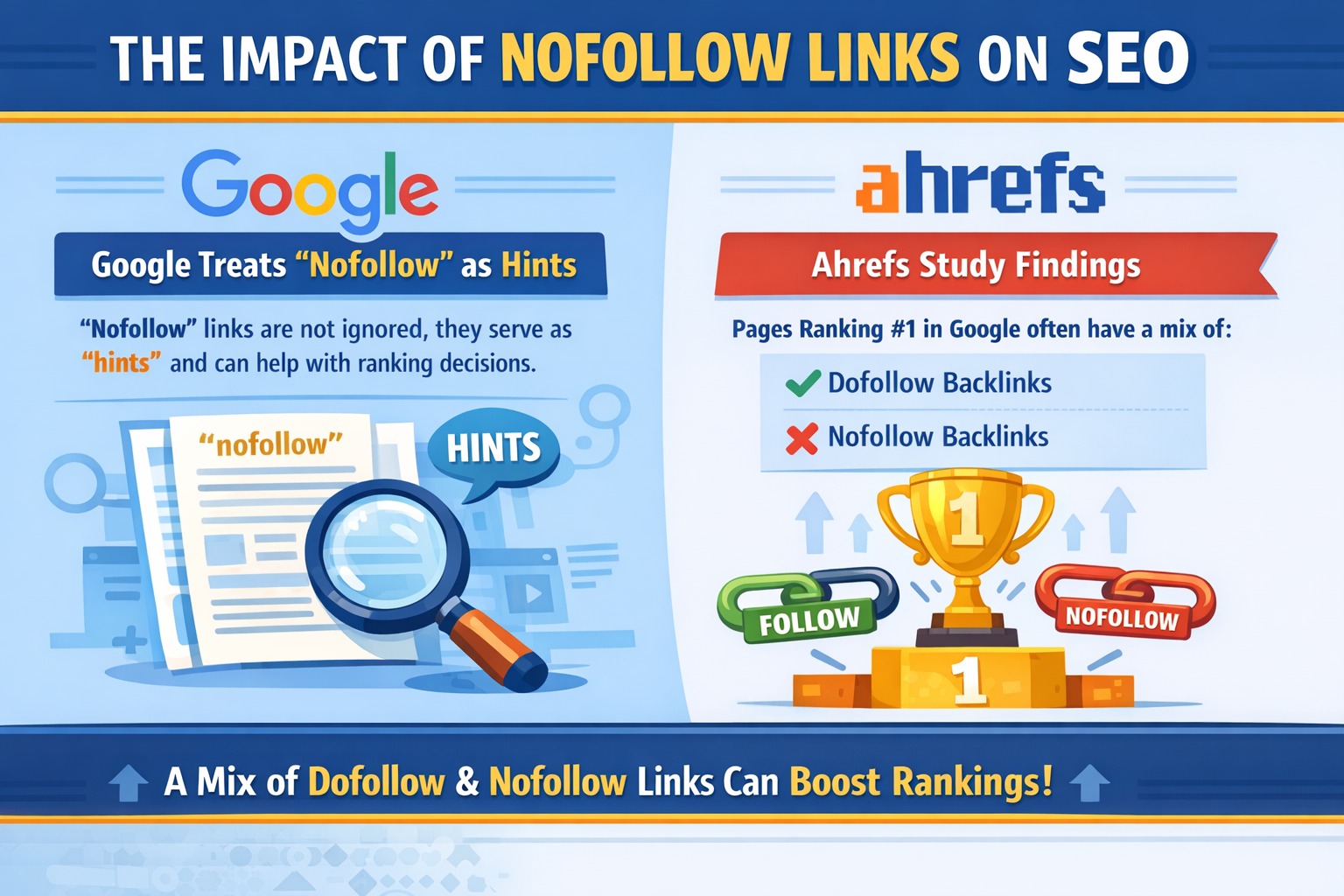
According to Google’s official documentation, nofollow links are treated as “hints” rather than ignored signals, meaning they can still contribute to ranking decisions.
Now look at this.
A study by Ahrefs found that pages ranking #1 in Google often have a mix of dofollow and nofollow backlinks.
Not just one type.
See! This changes everything:
Google expects a natural backlink profile.
And that includes both.
In this guide, you’ll learn:
In short, this is not about choosing one over the other.
It’s about using both the right way.
Dofollow links are the default type of backlinks.
They pass authority from one website to another.
In SEO, this authority is often called “link equity” or “link juice.”
See! When a page links to you with a dofollow link, it tells search engines:
“This content is trustworthy.”
That’s why dofollow links directly impact rankings.
But not all dofollow links are equal.
The best dofollow links usually come from:
These links carry the most value because they make sense.
In short, dofollow links help search engines trust your content
and improve your position in search results.
No-follow links are backlinks that do not pass full authority.
They include a special tag that tells search engines:
“Do not fully count this link as a ranking signal.”
But here’s the important part.
They are not useless.
See! Google now treats nofollow links as hints, not strict rules.
That means they can still:
Nofollow links are commonly found in:
In short, nofollow links may not pass full SEO value.
But they still play a role in building a natural backlink profile.
The difference is simple.
Dofollow links pass authority.
No-follow links don’t pass full authority.
But that’s not the whole picture.
See! Both links serve different purposes.
Dofollow backlinks:
Nofollow backlinks:
Another key difference is usage.
Dofollow links are usually found in:
While nofollow links appear more often in:
In short, dofollow links build authority.
NoFollow links support balance and trust.
You need both to build a strong SEO profile.
Dofollow links should be your primary focus.
But only when they are high quality.
See! Not every dofollow link helps your rankings.
You need the right ones.
Focus on:
These are the best dofollow links.
They pass real value because they make sense in context.
Avoid chasing random links.
Even if they are dofollow.
Also, look at competitor backlinks.
See where they are getting strong links from.
And find ways to earn similar ones.
If this process feels time-consuming, working with a link-building agency like backlinkier.com can help.
They focus on building contextual and relevant backlinks instead of low-quality links.
In short, quality dofollow links build authority.
And authority improves rankings.
Nofollow links are often ignored.
That’s a mistake.
See! They still play an important role in SEO.
First, use them to drive traffic.
Links from forums, social media, and communities can bring real visitors.
Second, they help build a natural backlink profile.
A website with only dofollow links looks unnatural.
Google expects balance.
Also, when you analyze competitor backlinks, you’ll notice they also have nofollow links.
That’s not by accident.
Finally, some nofollow links can turn into dofollow links over time.
If your content proves valuable, websites may link to you again.
Not all backlinks help your SEO.
Some can hurt it.
These are called toxic backlinks.
They usually come from:
See! Even though dofollow links from these sources can damage your rankings.
So don’t chase links blindly.
Also, avoid low-value links like:
They add little to no real SEO value.
Remember! A few bad links can weaken your entire backlink profile.
Broken backlinks are links pointing to pages that no longer exist.
Most people ignore them.
See! That’s a missed opportunity.
If a website is linking to a broken page, you can replace that link with your own content.
This works because you are helping fix a problem.
Start by:
This strategy works for both dofollow and nofollow links.
But dofollow replacements bring more SEO value.
Dofollow and nofollow backlinks are not competitors.
They work together.
Dofollow links help you build authority.
NoFollow links support trust and balance.
See! A strong SEO strategy is never one-sided.
When you use both correctly, you create a natural and powerful backlink profile.
So, focus on relevant backlinks, high-quality dofollow links, and smart use of nofollow links.
Avoid shortcuts.
Avoid toxic backlinks.